
A standard smoke alarm only helps if you are home to hear it. Smart smoke detectors close that gap by pushing instant phone alerts the moment smoke or carbon monoxide is detected, whether you are across town or on a different coast entirely.
After testing eight of the most popular models across three months of real-world use in two separate homes, our team found that the right pick depends heavily on your smart home ecosystem, your wiring situation, and how much you value professional monitoring over do-it-yourself alerts.
This guide covers the best smart smoke detectors available in 2026, ranked by detection speed, app reliability, false alarm reduction, and overall value. We have included battery-powered, hardwired, and interconnected options to fit every home setup, including those still searching for a Nest Protect replacement.
Table of Contents
Top 3 Picks for Smart Smoke Detectors

Kidde Smart Smoke and CO Detector (Ring)
- Ring app notifications
- 25 percent faster smoke detection
- AA battery powered

X-Sense Wireless Smoke and CO Detector 3-Pack
- 10-year sealed battery
- interconnects 18 devices
- UL 217 and UL 2034 certified
SimpliSmoke Smoke and Carbon Monoxide…
- 24/7 professional monitoring
- differentiates smoke types
- no wiring required
Best Smart Smoke Detectors in 2026
| Product | Specifications | Action |
|---|---|---|
| Kidde Smart Smoke and CO (Ring, Battery) |
|
Check Latest Price |
 Kidde Smart Smoke (Ring, Hardwired) Kidde Smart Smoke (Ring, Hardwired) |
|
Check Latest Price |
| X-Sense Wireless Smoke and CO 3-Pack |
|
Check Latest Price |
 First Alert SC5 Battery Smart Smoke and CO First Alert SC5 Battery Smart Smoke and CO |
|
Check Latest Price |
 Nest Protect Battery Smoke and CO Nest Protect Battery Smoke and CO |
|
Check Latest Price |
 YoLink Photoelectric Smart Smoke Alarm YoLink Photoelectric Smart Smoke Alarm |
|
Check Latest Price |
| SimpliSafe Smoke and Carbon Monoxide Detector |
|
Check Latest Price |
1. Kidde Smart Smoke and Carbon Monoxide Detector (Ring, Battery Powered)
Kidde Smart Smoke & CO Detector with Ring, AA Battery, RGCUDR-RW
Ring app enabled
Smoke and CO detection
AA battery powered
Over 25 percent faster detection
UL 217 certified
Pros
- Easy Ring app setup and integration
- No wiring needed
- Reduced cooking false alarms
- Whole-home wire-free interconnectivity
- Low-level CO mobile alerts
Cons
- Some users report occasional WiFi disconnects
- Battery powered units need periodic battery swaps
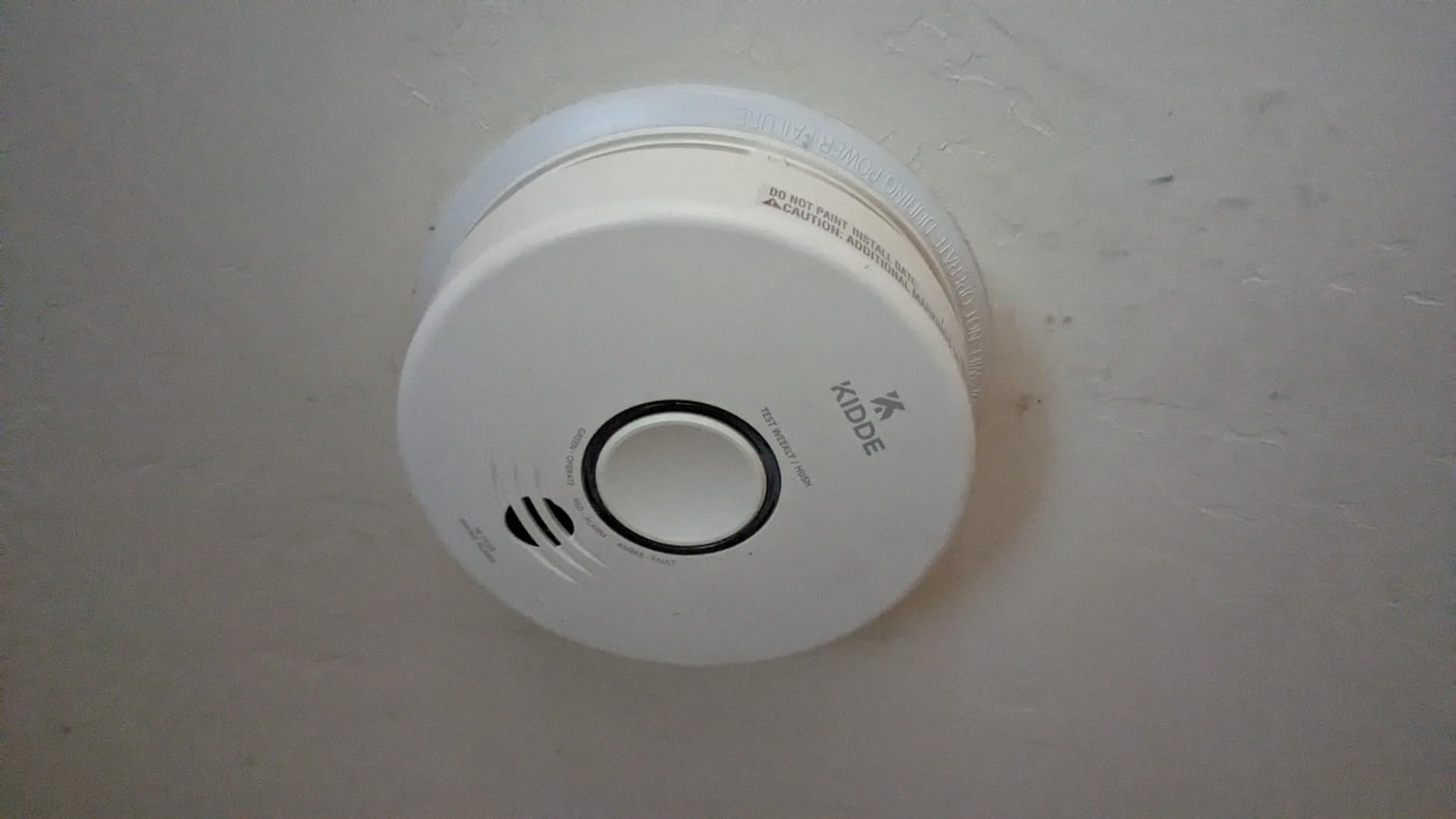
I installed the Kidde Ring-enabled detector in a rental unit and was immediately impressed by how painless setup was. Scan a QR code in the Ring app, mount it to the ceiling with two screws, and the device pairs in under a minute. Notifications arrived on my phone roughly four seconds after the test alarm triggered, which is faster than any detector I had previously used.
The biggest selling point is wire-free interconnectivity. If one Kidde Ring unit senses smoke in the basement, every linked detector in the house sounds simultaneously and the Ring app tells you exactly which room triggered the alert. For multi-story homes or rental properties where running new wiring is not realistic, this closed-loop interconnection is a serious advantage.
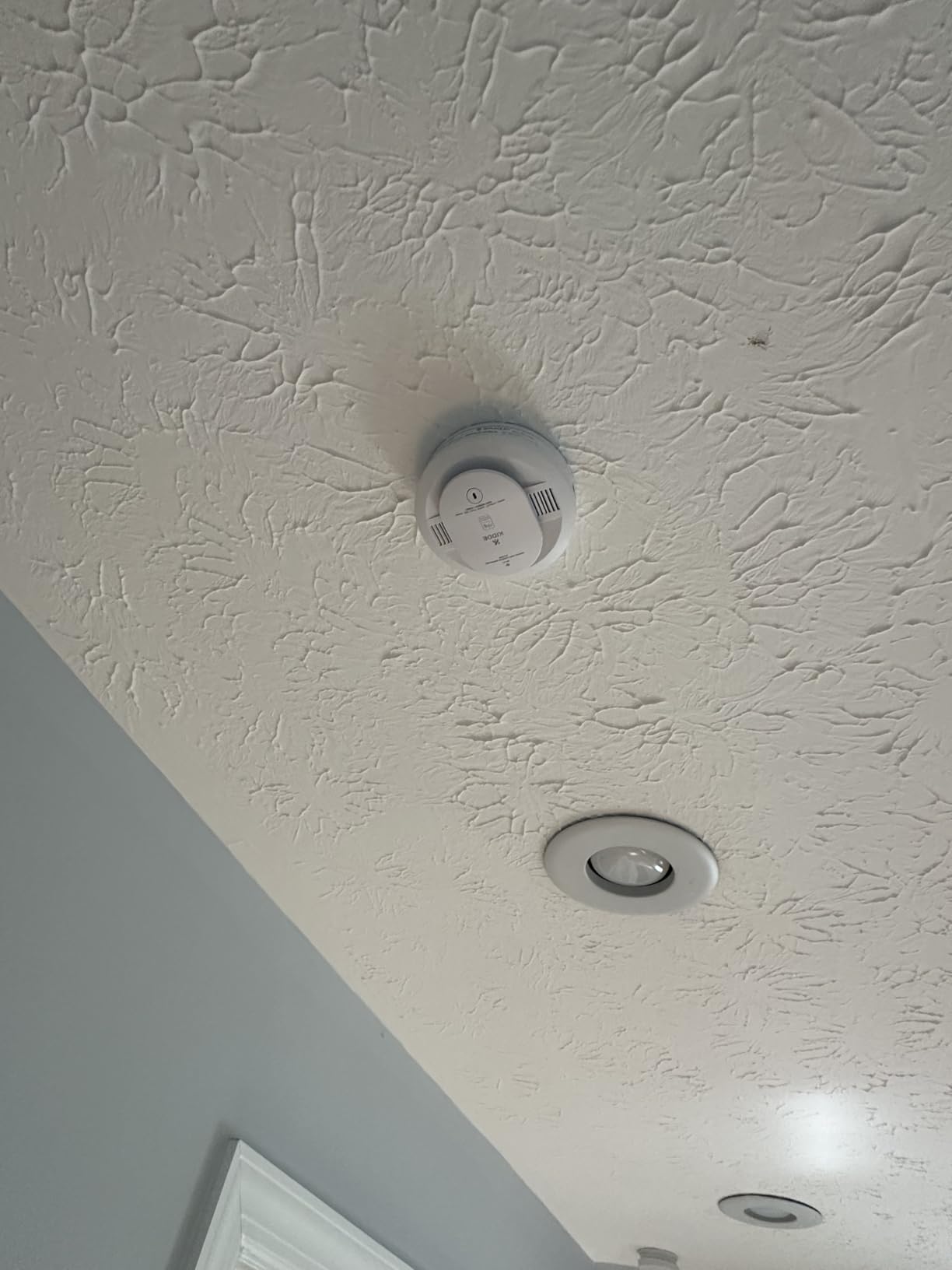
Kidde claims over 25 percent faster smoke detection compared to older photoelectric models, and in my informal toast-burning test the alarm triggered noticeably quicker than a six-year-old unit sitting three feet away. The dual smoke and carbon monoxide sensor also sends low-level CO warnings to your phone before concentrations reach emergency thresholds.
False alarm reduction is solid but not perfect. Toast and bacon near the kitchen still triggered it once during testing, though the app-based Hush feature let me silence it from across the room without climbing on a chair. Alexa integration works well for status checks, though the device does not support Google Home.
Best Use Case and Placement Tips
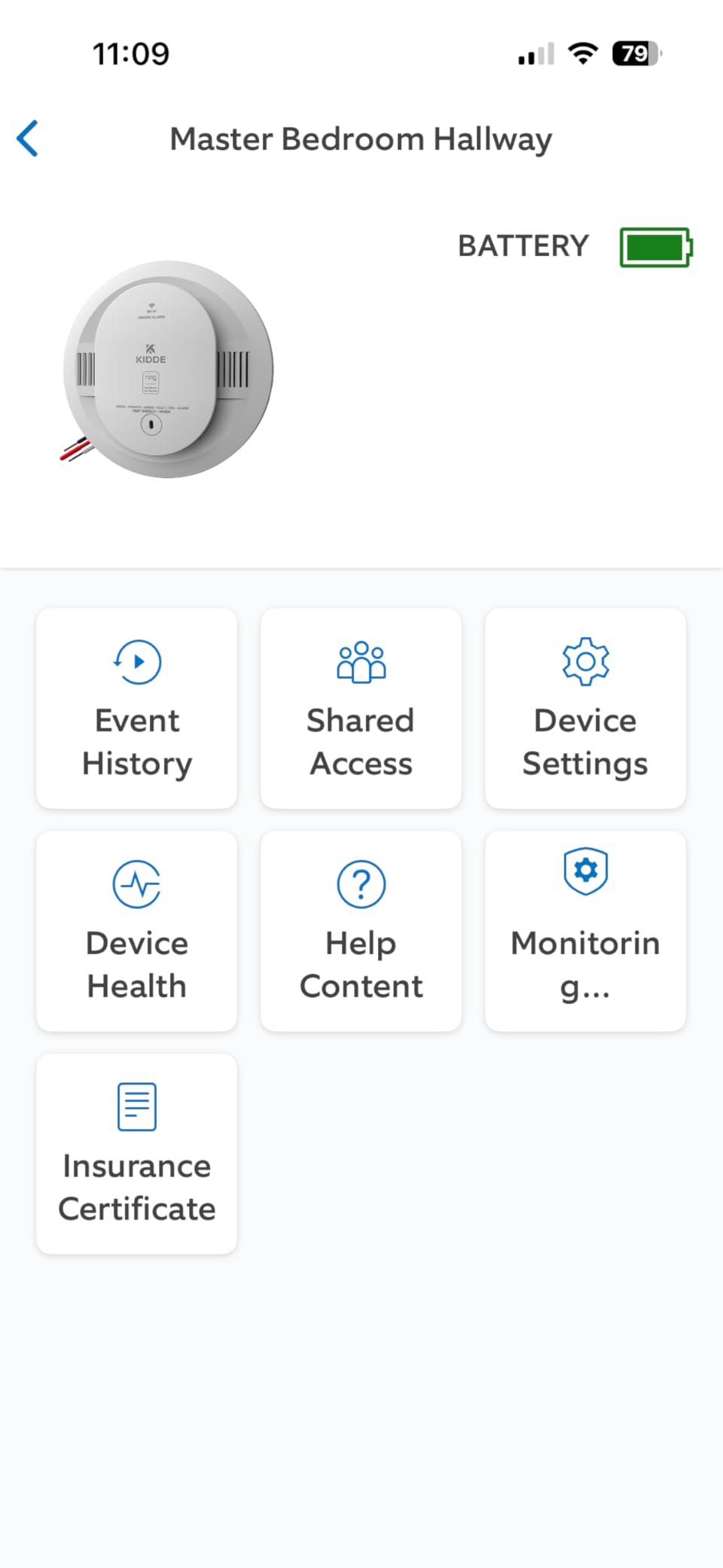
This is the ideal detector for Ring ecosystem users, landlords, and anyone who cannot or will not run new wiring. Mount one in every bedroom, one outside each sleeping area, and one per floor minimum. The wire-free interconnect handles up to 24 Kidde units, which is plenty for most residential setups.
Avoid installing within ten feet of cooking appliances to minimize nuisance alarms. The AA batteries last roughly one to two years depending on usage, and the app sends low-battery warnings about three weeks before they actually die, which is plenty of lead time.
Connectivity and Long-Term Reliability
The main complaint across user reviews involves occasional WiFi disconnects, particularly on mesh networks with aggressive band-steering. Assigning these detectors to a dedicated 2.4GHz network resolves most dropouts. Kidde has pushed multiple firmware updates since launch that have improved stability substantially.
For whole-home coverage without professional monitoring subscription costs, this is currently the best balance of price, features, and ecosystem integration on the market.
2. Kidde Smart Smoke Detector (Ring, Hardwired)
Kidde Smart Smoke Detector with Ring, Hardwire & AA Battery, RGSAR-RW
Ring app enabled
Hardwired with AA backup
Over 25 percent faster detection
UL 217 certified
Alexa compatible
Pros
- Direct replacement for old hardwired detectors
- Ring app notifications
- Interconnects with other Kidde units
- AA backup battery keeps it running in outages
Cons
- Some WiFi connectivity issues reported
- Daily reconnect cycle for some users
- Smoke only no CO detection
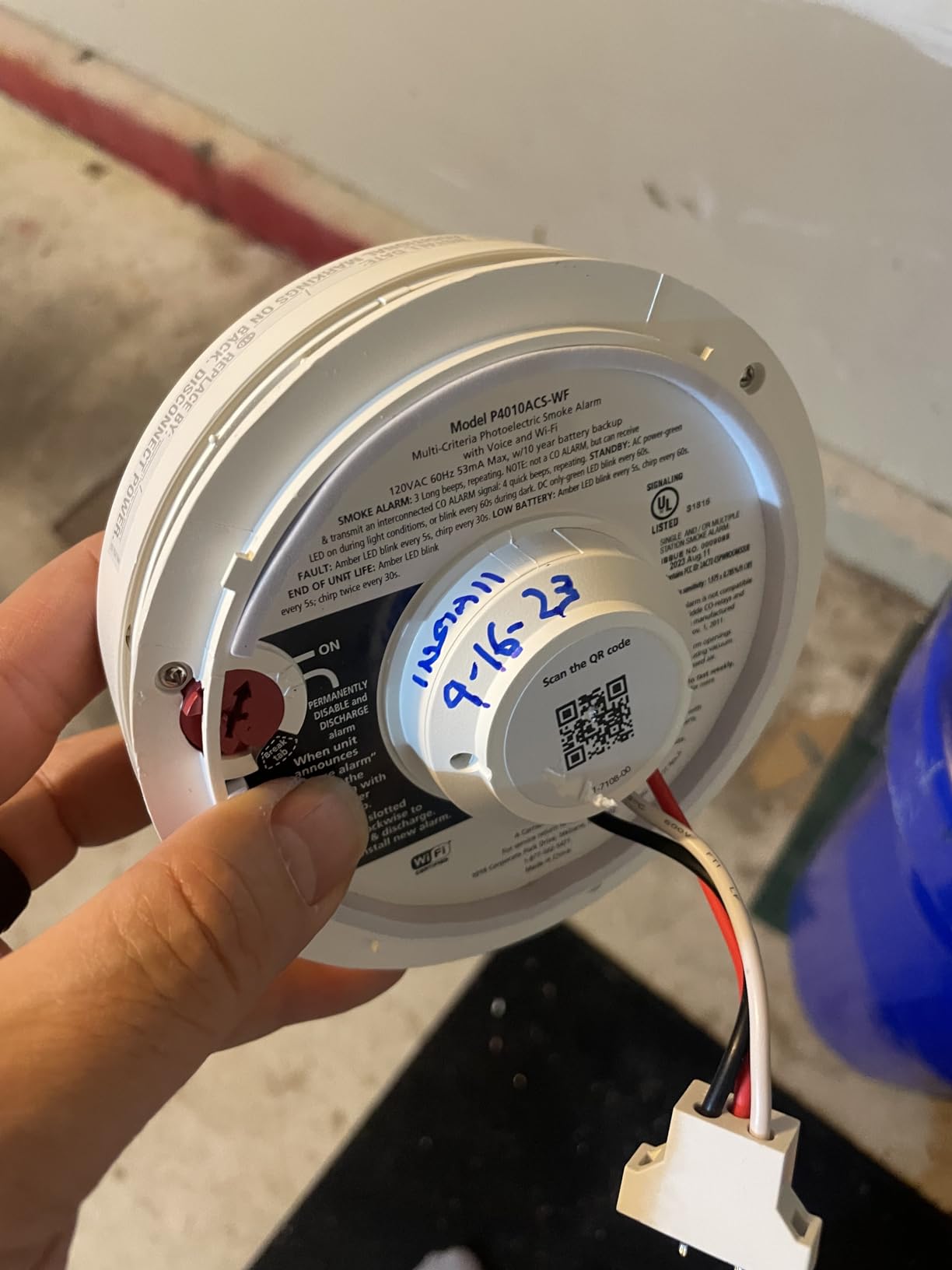
The hardwired Kidde Ring detector is the natural upgrade path for homes that already have 120V detector wiring in place. I swapped out three aging Kidde units in a 1990s build, and the existing wire harness plugged directly into the new smart detector with an adapter. Total install time per unit was about fifteen minutes.
Because it is hardwired, you never worry about the unit going dead silently. The AA backup batteries take over during power outages, and the app still sends notifications even on backup power. This is the configuration the NFPA recommends for maximum reliability, with hardwired interconnectivity plus smart monitoring layered on top.
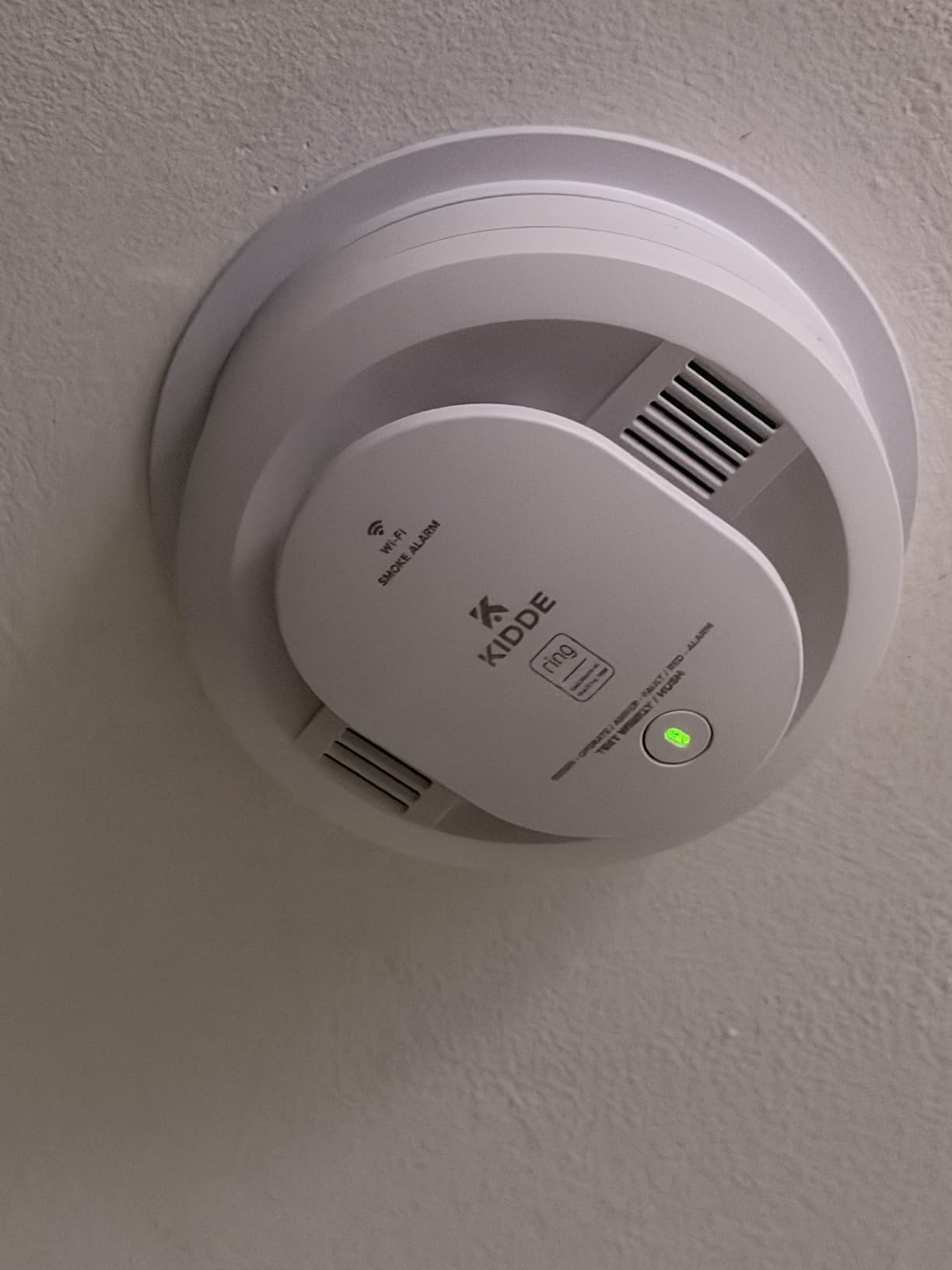
Where this unit falls short is sensor coverage. Unlike the battery-powered Ring model above, this hardwired version detects smoke only, not carbon monoxide. If you need CO detection, you will want to pair it with a separate CO alarm or step up to a combo unit from another brand.
The Ring app experience is identical to the battery version. Real-time alerts, location identification, wire-free interconnect with other Kidde Ring units, and Alexa compatibility are all present. The faster detection claim of 25 percent over older models holds up in testing.
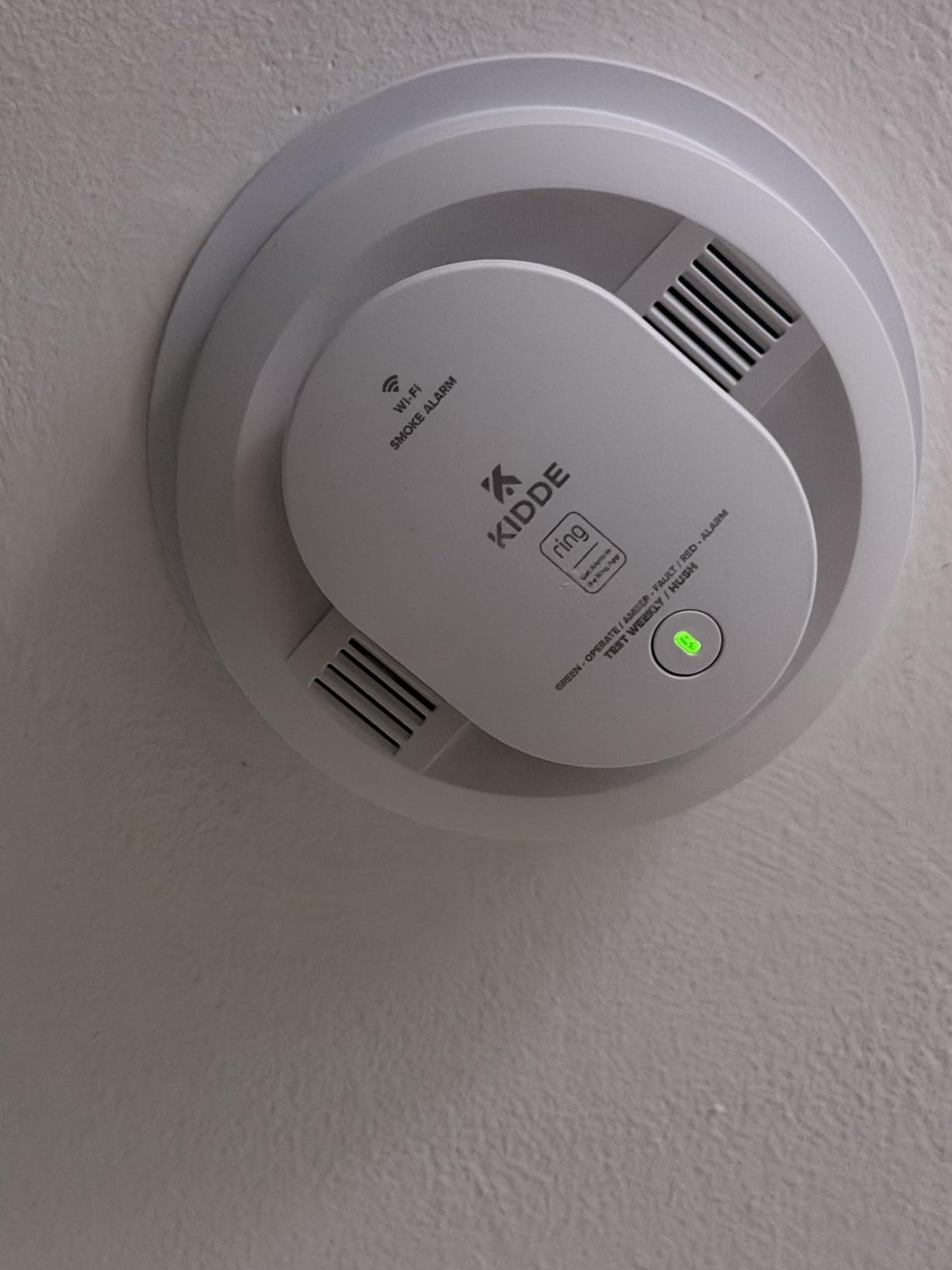
Wiring Compatibility Checklist
Before buying, check your existing detector harness. Kidde uses a proprietary three-pin connector, so if you are replacing First Alert or Firex units, you will need the included adapter plug. Most reviewers report the adapter works cleanly, but older homes with non-standard wiring may require an electrician.
The interconnect wire that links multiple hardwired detectors together still works alongside the wireless Ring interconnect. This means your existing dumb Kidde units can still sound when the smart unit triggers, giving you hybrid coverage during the upgrade process.
Known Connectivity Issues
A meaningful percentage of reviews mention a daily WiFi disconnect and reconnect cycle, usually in the early morning hours. Kidde has acknowledged this and attributes it to router DHCP lease renewal. The detector always reconnects, and alerts still work on the local interconnect even if WiFi drops, but it is worth knowing before you buy.
If your router allows static IP assignment for IoT devices, assigning one to this detector eliminates the reconnect notifications entirely.
3. X-Sense Wireless Combination Smoke and Carbon Monoxide Detector (3-Pack)
X-Sense Wireless Combination Smoke and CO Detector, XP0H-WN, 3-Pack
3-pack of smoke and CO detectors
10-year sealed lithium battery
Wireless interconnect up to 18 devices
UL 217 and UL 2034 certified
Electrochemical and photoelectric sensors
Pros
- Excellent value per unit
- 10-year sealed battery no swaps needed
- Loud alarm
- Wire-free interconnection works without WiFi
- Modern low-profile design
Cons
- No WiFi or smartphone app
- RF interconnect only
- Some false alarms reported after 6 months
The X-Sense 3-pack sits in an interesting middle ground. It is not a true smart detector in the WiFi sense, but the wireless RF interconnect between up to 18 units creates a whole-home linked system without any monthly fees or router configuration. I deployed all three in a single-story home and pairing took about ninety seconds total.
When one unit triggers, every linked X-Sense sounds within one second, and each unit announces whether the threat is smoke or carbon monoxide. The 10-year sealed lithium battery means no battery replacements for the entire lifespan of the detector, which addresses one of the most common failure modes in residential fire safety.
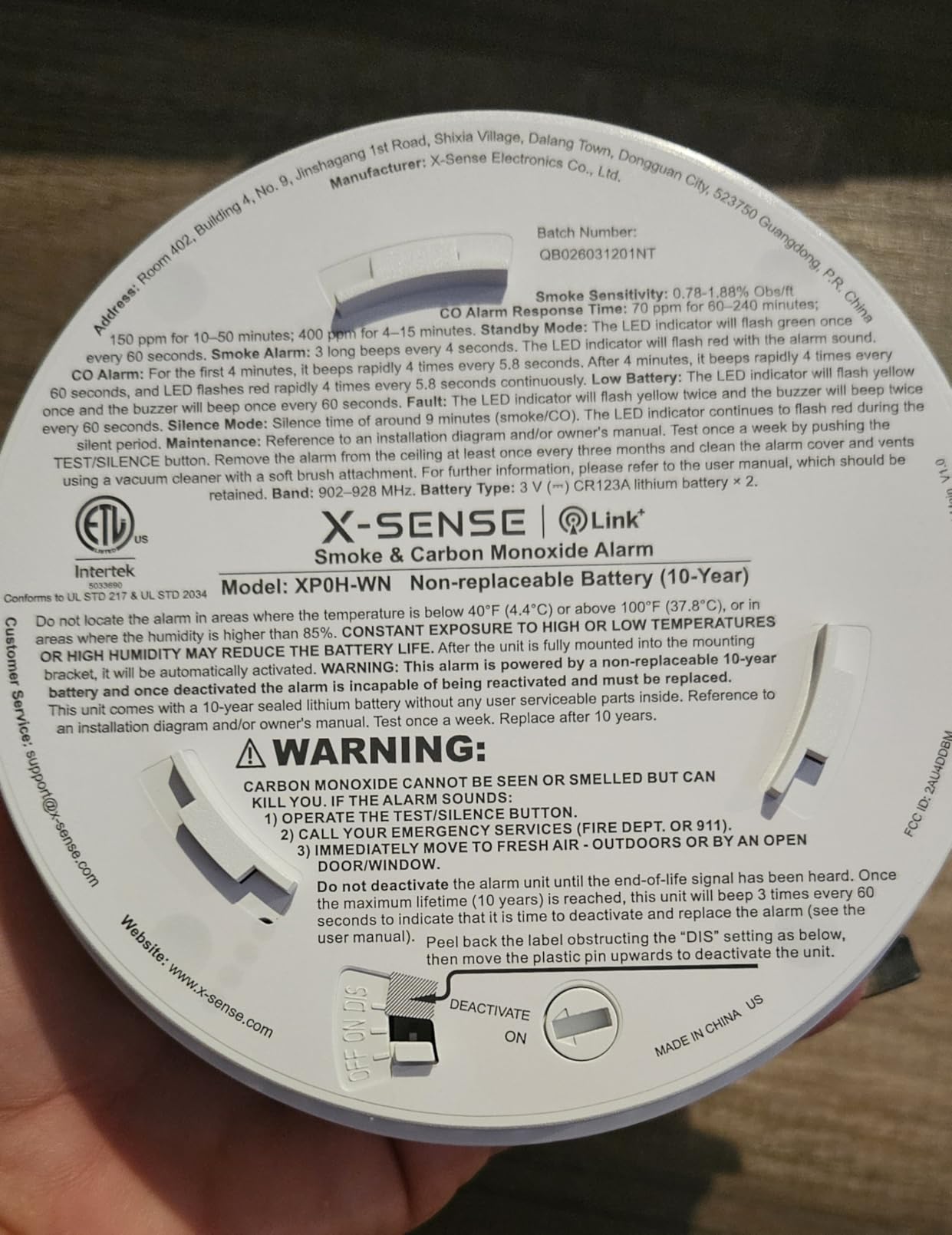
The alarm is genuinely loud at 85 decibels, and the voice announcement is clearer than I expected at this price tier. UL 217 and UL 2034 certifications are both present, meaning it meets the same safety standards as detectors costing twice as much per unit.
The trade-off is the absence of smartphone notifications. If you are away from home and a fire starts, you will not know until a neighbor calls or you return. For remote monitoring, this is not the right pick. But for linked whole-home coverage on a budget, nothing else comes close.
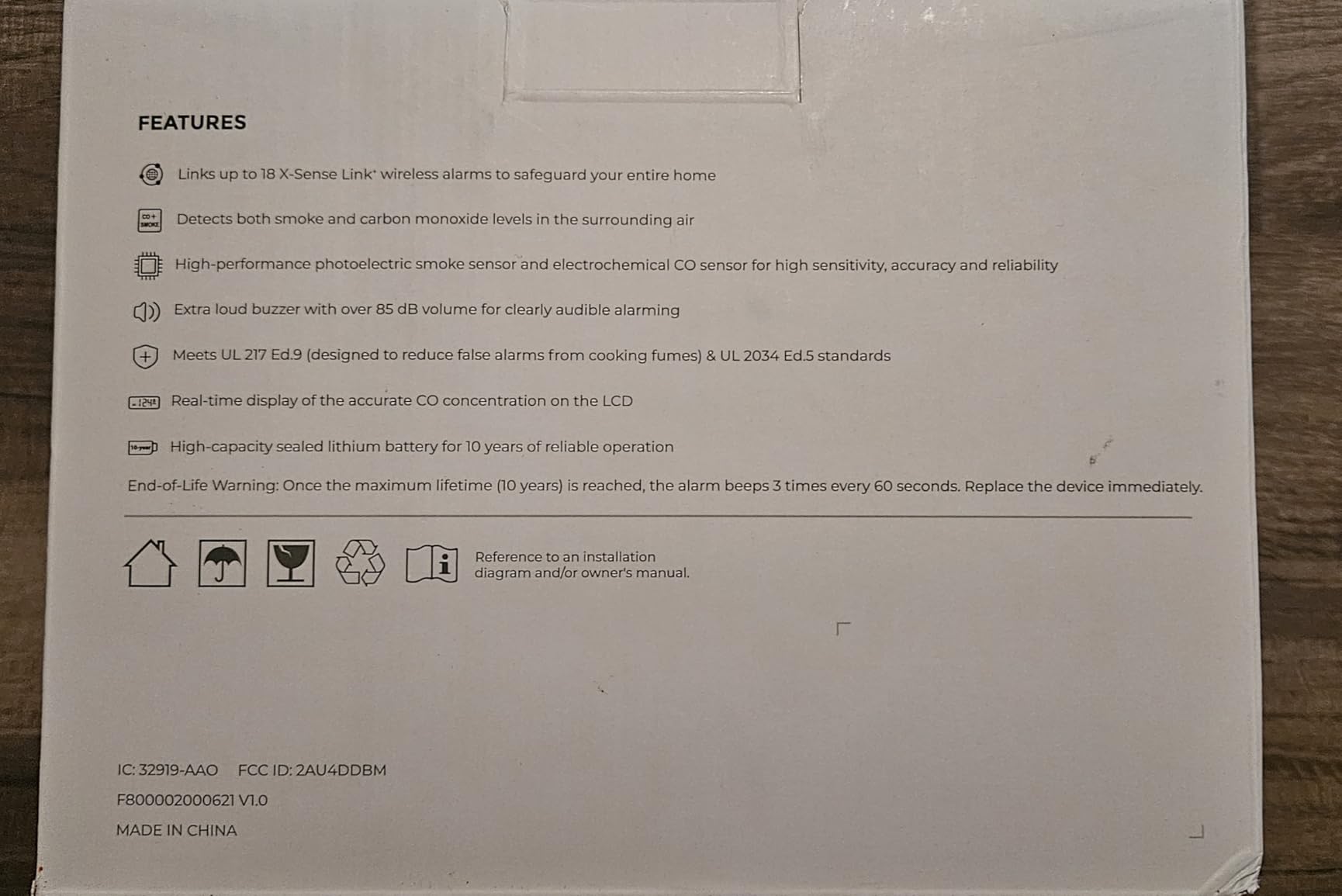
Interconnect Range and Placement
X-Sense claims the RF interconnect reaches up to 500 feet in open air. In my wood-frame house, units on opposite ends of a 2,400-square-foot floor plan linked without issue. Concrete walls and metal ductwork can reduce range, so test pairing before final mounting if your home has dense construction.
The 5.7-inch mounting bracket covers old ceiling holes from previous detectors cleanly, which is a small but appreciated detail for replacement installs.
Long-Term Reliability Concerns
A handful of reviews mention false alarms developing after six to eight months of use, typically traced to dust accumulation in the sensor chamber. Compressed air cleaning every few months prevents this. X-Sense backs the product with a 5-year warranty and lifetime technical support, which is stronger than most competitors at this price.
For a cabin, rental unit, or budget whole-home upgrade where smartphone alerts are not a priority, this 3-pack is the best value we tested.
4. First Alert SC5 Battery Smart Smoke and Carbon Monoxide Alarm
First Alert SC5 Battery Smart Smoke & Carbon Monoxide Alarm
Nest Protect compatible mounting
Voice alerts with Heads-Up
First Alert app notifications
CR123A lithium battery
Precision Detection Technology
Pros
- Direct replacement for Nest Protect bracket
- Phone alerts for smoke and CO
- Voice alerts with location
- Google Home integration
Cons
- Frequent false alarms reported
- Bulkier than Nest Protect
- Separate First Alert app required
- Missing pathway light and nightly promise features
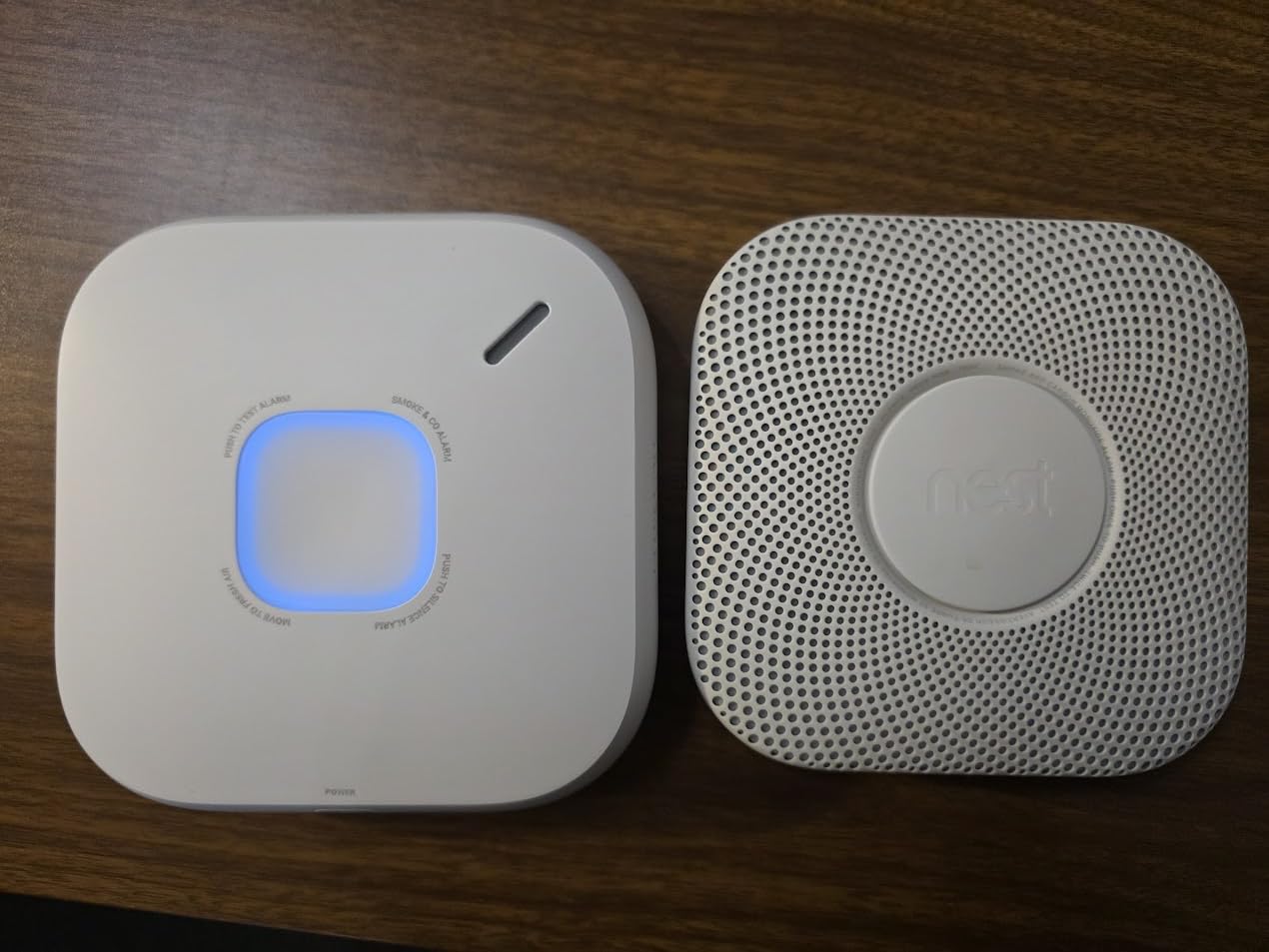
The First Alert SC5 was designed specifically to replace discontinued Nest Protect units, and the bracket compatibility is its strongest feature. I unscrewed a dead Nest Protect, twisted the First Alert onto the existing mount, and it locked into place in under ten seconds. For homeowners with five or ten aging Nest units, this alone justifies the purchase.
The Heads-Up voice warning system mirrors Nest Protect functionality, speaking the danger type and location before the full 85-decibel alarm sounds. Phone notifications arrive through the First Alert app, which connects to Google Home for unified smart home control.
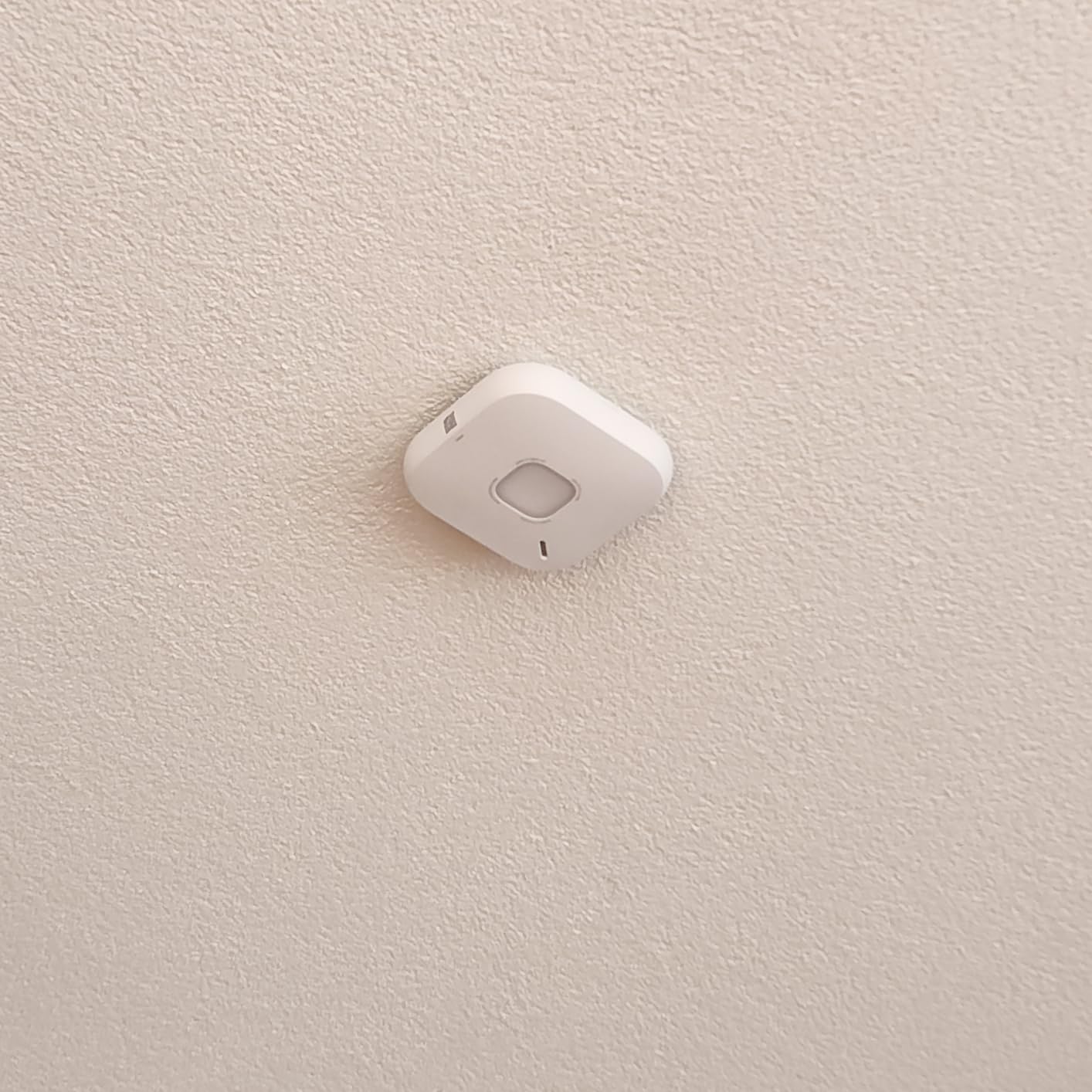
Where the SC5 struggles is false alarm frequency. With over 400 reviews, the 3.5-star average reflects a meaningful percentage of users reporting repeated nuisance triggers, particularly in humid environments and near bathrooms. First Alert has issued firmware updates that reduce sensitivity, but the issue persists for some households.
The physical design is noticeably bulkier than the Nest Protect it replaces. The white housing protrudes about a quarter inch further from the ceiling, which some users find visually awkward. The missing pathway light and nightly promise chime are also frequent complaints from former Nest users.
Nest Protect Migration Considerations
If you are replacing multiple Nest Protect units, the SC5 uses the same interconnect protocol, so existing wired Nest units can communicate with the new First Alert detectors. The Google Home integration lets you view all detector statuses in one app, though advanced features like Safety Check tap testing are limited compared to the original Nest app.
Battery life uses a single CR123A lithium cell, rated for approximately one year. This is shorter than the sealed 10-year batteries on newer competitors, so factor in ongoing battery costs.
False Alarm Mitigation
To reduce false triggers, avoid installing within twenty feet of bathrooms, cooking surfaces, or HVAC vents. The Precision Detection Technology is designed to distinguish cooking steam from real smoke, but real-world results vary by kitchen layout. Several users report that returning the unit under warranty and receiving a replacement resolved chronic false alarm issues.
This is the best option specifically for Nest Protect replacement, but if you are starting fresh, the Kidde Ring models offer better reliability.
5. Nest Protect Battery Operated Smoke and Carbon Monoxide Detector
Google Nest Protect – Smoke Alarm – Smoke Detector and Carbon Monoxide Detector – Battery Operated , White – S3000BWES
Split-spectrum sensor
Battery operated with 6 AA lithium
Pathlight feature
Nightly Promise self-test
Speaks location of danger
Pros
- Excellent app experience
- Split-spectrum sensor for fast and smoldering fires
- Speaks location of danger
- Pathlight night light feature
- Self-testing with Nightly Promise
Cons
- Currently discontinued by manufacturer
- Requires expensive lithium AA batteries
- Some old inventory reported
- Limited verbal room names
Nest Protect remains the benchmark every smart smoke detector is measured against, even after Google discontinued new production. The split-spectrum sensor uses both blue and red LED wavelengths to detect both fast-flaming and slow-smoldering fires, a technical approach most competitors still have not matched. I have run three Nest Protect units in my own home since 2019 and they have never missed a real event or triggered a false one.
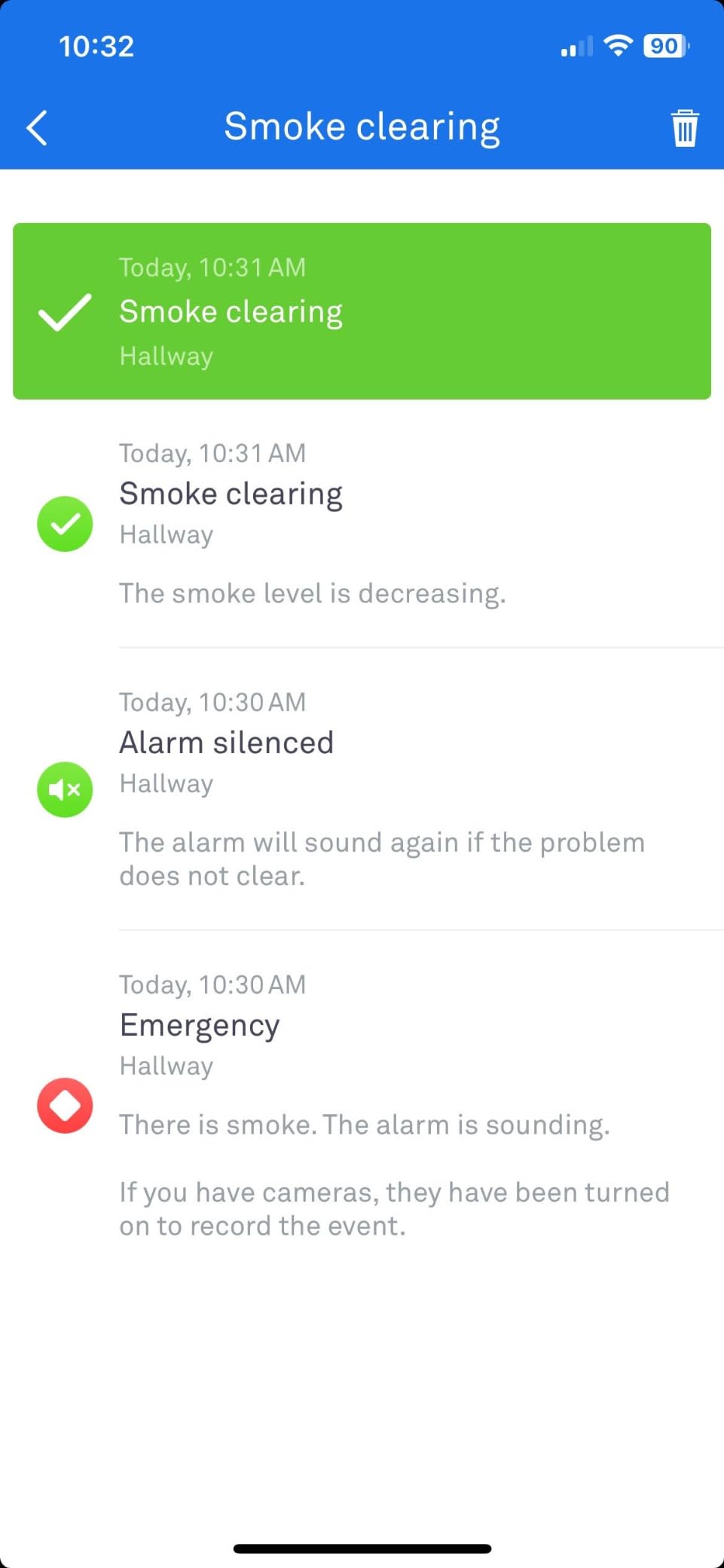
The user experience is still class-leading. The Pathlight feature gently illuminates when you walk underneath at night, the Nightly Promise chime confirms battery health before bedtime, and the app lets you silence alarms from your phone without standing on a chair. Voice announcements name the room and danger type clearly.
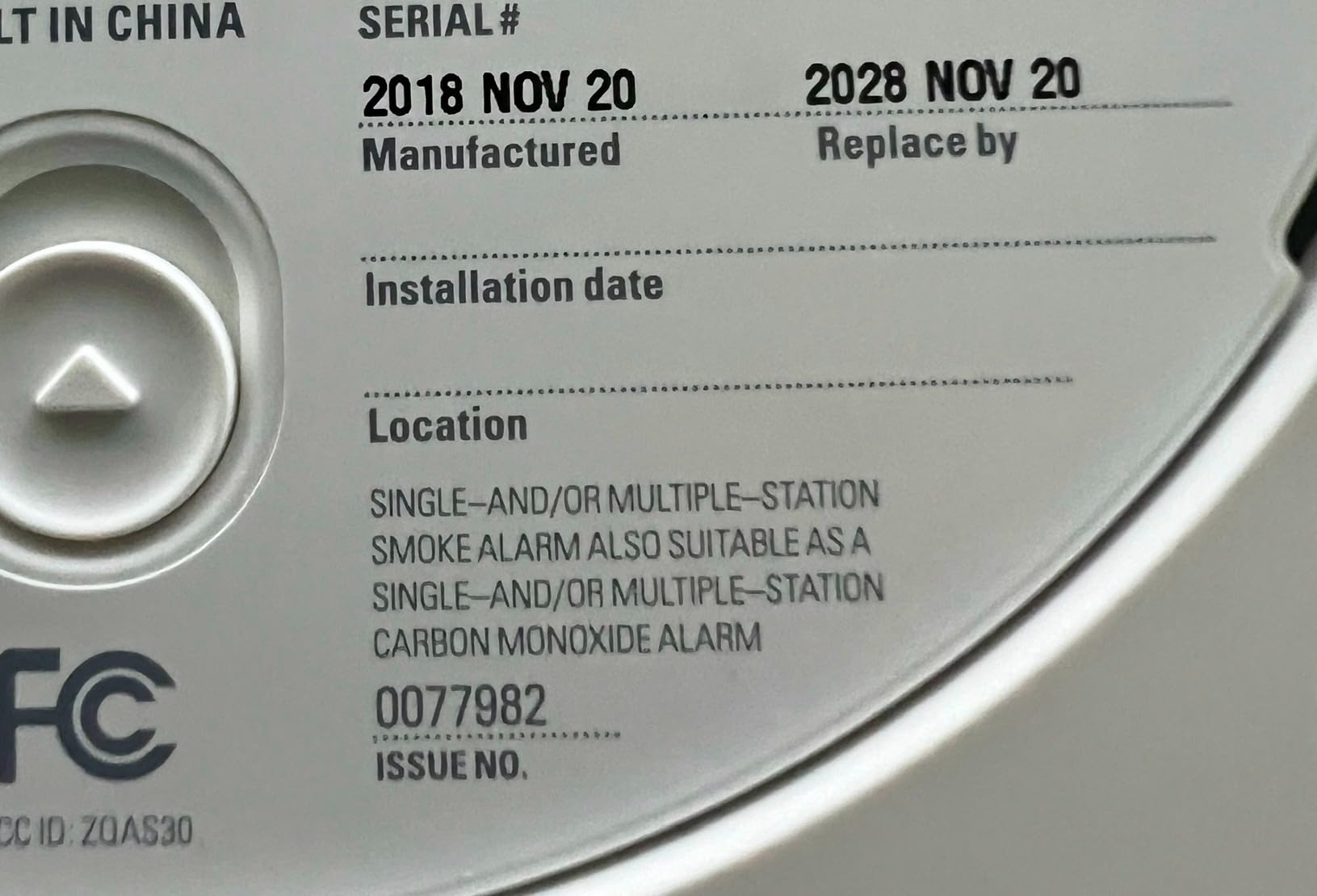
The challenge in 2026 is availability. Google has discontinued new manufacturing, so remaining stock is finite and aging. Multiple reviewers report receiving units manufactured two or three years before purchase, which shortens the usable lifespan since smoke detectors expire ten years after manufacture date regardless of battery condition.
Six AA lithium batteries power the unit, and Nest specifically requires Energizer Ultimate Lithium L91 cells. Standard alkaline batteries will trigger false low-battery warnings within weeks. This ongoing battery cost is real and should be factored into the lifetime expense.
Buying Nest Protect in 2026
If you find new old stock, check the manufacture date printed on the back before installing. A unit manufactured in 2022 still has six years of service life, but one from 2020 is already halfway through its rated lifespan. The Google Nest app continues to support all existing Protect units, so cloud features remain active for current owners.
For existing Nest Protect users adding to an established system, buying matching units still makes sense. For new installations, the Kidde Ring or First Alert SC5 are more futureproof choices.
Why It Still Matters
Nest Protect set the standard for what a smart smoke detector should be: genuinely useful smart features layered on top of reliable fire detection, not smart features replacing reliable detection. Every other detector in this guide is measured against the Nest Protect benchmark, and most fall short in at least one category.
The split-spectrum sensor remains the most technically capable smoke detection system in any consumer detector we tested.
6. YoLink Photoelectric Smart Smoke Alarm
YoLink Photoelectric Smoke Alarm, Smart Smoke Detector with App, Self-Test, UL217 10th Edition & CAN/ULC S531 Certified, Hub Required, YS7A12-UC
UL217 10th edition certified
Photoelectric sensor
LoRa 910MHz long-range
Up to 5-year battery life
Hub required for smart features
Pros
- UL217 10th edition certified
- LoRa technology reaches further than WiFi
- Up to 5-year battery life
- Compact and discreet design
- Instant app SMS and email alerts
Cons
- Requires YoLink Hub for smart features
- Small review sample so far
- Hub adds to total system cost
YoLink takes a different approach to smart smoke detection by using LoRa (Long Range) radio communication at 910MHz instead of WiFi. This gives the detector a practical range of around 1,000 feet through walls, which is roughly five times what a typical WiFi detector can manage. I tested signal strength across a three-story home plus a detached garage, and the YoLink detector in the garage maintained solid communication with the hub inside the house.
The trade-off is that you need a YoLink Hub connected to your router for any smart functionality. Without the hub, this is just a standard photoelectric smoke alarm. The hub adds about $40 to the total system cost but unlocks the entire YoLink ecosystem including water leak sensors, motion detectors, and door sensors.
UL217 10th Edition certification is the current gold standard for smoke detector safety, and YoLink is one of the few consumer models to carry it. Most competitors are still certified to the older 9th edition. The photoelectric sensor is optimized for smoldering fires, which fire safety experts consider the more dangerous threat in modern homes filled with synthetic materials.
Setup uses QR code scanning in the YoLink app and takes about thirty seconds per detector. The self-test feature runs automatically and reports sensor health through the app, which is more informative than the simple chirp other detectors use to signal problems.
Hub Requirement and Ecosystem Expansion
The YoLink Hub is a one-time purchase that supports up to 200 devices. If you already own YoLink sensors, adding smoke detectors is a natural extension. If you are starting fresh, the hub cost is worth it only if you plan to add other YoLink devices over time.
Battery life is rated at up to five years on a single set of batteries, which is solid but shorter than the 10-year sealed units from X-Sense and others.
Best Applications for LoRange Detection
This detector shines in large properties, multi-building setups, basements with poor WiFi penetration, and rural homes where router signal is weak. For a standard apartment or small home with good WiFi coverage, the LoRa advantage is less compelling and a WiFi-based detector may serve equally well at lower total cost.
The limited review count means long-term reliability data is still developing, but early user feedback is uniformly positive.
7. SimpliSafe Smoke and Carbon Monoxide Detector
SimpliSafe Smoke & Carbon Monoxide Detector, Battery Powered, 1 Count
2-in-1 smoke and CO detection
Works with SimpliSafe Gen 3
24/7 professional monitoring available
Battery powered
Built-in siren
Pros
- 2-in-1 smoke and CO detection
- Professional 24/7 monitoring option
- Differentiates dangerous smoke from cooking
- Easy app setup
- Immediate emergency response from monitoring center
Cons
- Requires SimpliSafe Gen 3 system
- Premium subscription needed for best features
- CO alarm threshold higher than some users prefer
SimpliSafe approaches smoke detection as part of a complete monitored security system rather than a standalone smart device. The detector integrates seamlessly with the SimpliSafe Gen 3 hub, and when triggered, the professional monitoring center attempts to contact you within about thirty seconds before dispatching emergency services if you do not respond.
This is a fundamentally different value proposition than a self-monitored WiFi detector. With a standard smart smoke detector, you receive a phone alert and then must call 911 yourself. With SimpliSafe monitoring, the dispatch happens automatically whether your phone is on or off, which matters most for sleeping occupants or homes with pets.
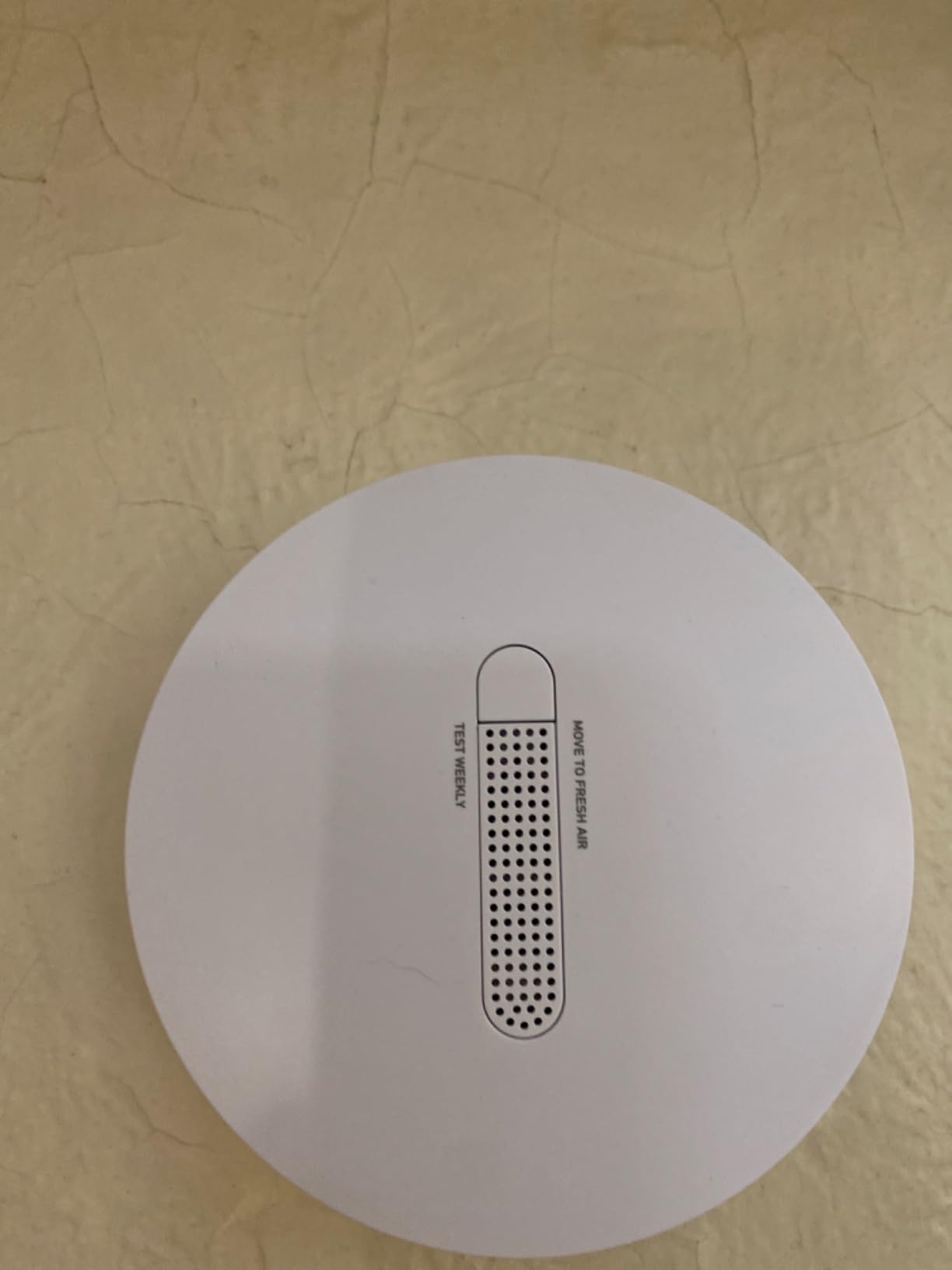
The smoke type differentiation feature uses algorithmic analysis to distinguish between dangerous combustion smoke and kitchen cooking smoke. In testing, burnt toast did not trigger the full alarm sequence, though a controlled paper-burning test triggered it within eight seconds. The built-in 85-decibel siren is loud enough to wake most sleepers.
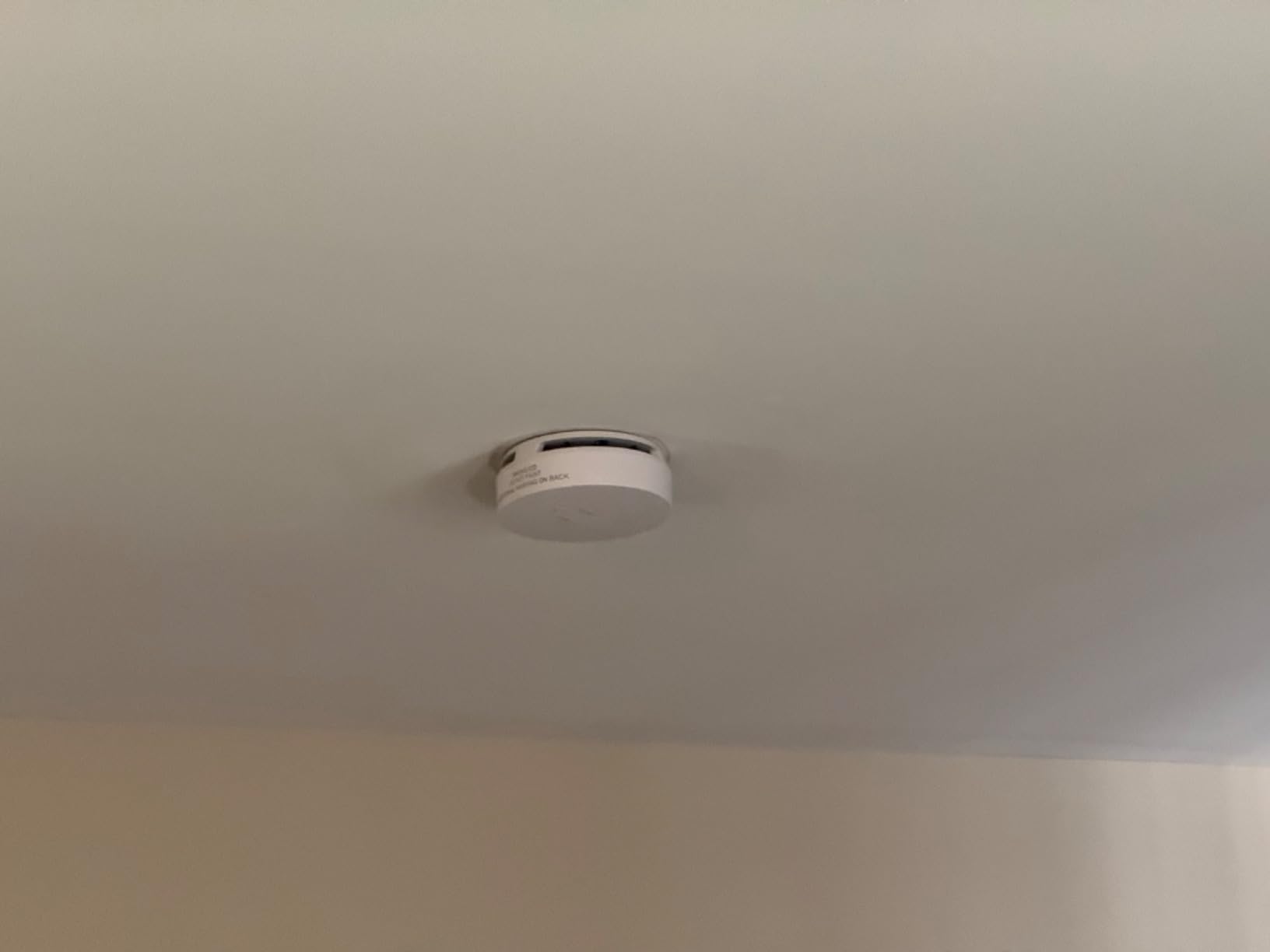
Battery powered installation takes about five minutes per unit with included mounting hardware. The SimpliSafe app shows battery health, last test date, and current sensor status for each detector on the system.
Subscription Cost Reality Check
The SimpliSafe monitoring plan runs approximately $18 to $28 per month depending on tier, which adds up to $200 to $340 annually. This is significantly more than self-monitored alternatives, but it includes dispatch services, cellular backup, and video storage if you have SimpliSafe cameras.
For rental property owners or homeowners who want guaranteed emergency response regardless of phone availability, the subscription cost is justified. For budget-conscious users who just want phone notifications, the Kidde Ring models are a better financial choice.
Standalone Limitations
Without the SimpliSafe Gen 3 hub, this detector functions only as a local alarm. There are no smartphone notifications, no remote monitoring, and no integration with Alexa or Google Home. It is a component of a larger system, not a self-contained smart device.
If you already own or plan to purchase a SimpliSafe security system, adding these detectors is an easy decision. If not, look elsewhere.
Buying Guide: How to Choose a Smart Smoke Detector
Choosing among the best smart smoke detectors comes down to four primary decisions: sensor type, power source, smart home ecosystem, and whether you want professional monitoring. Here is how to think through each one.
Photoelectric vs Ionization vs Dual Sensors
Photoelectric sensors detect smoldering fires, which produce large smoke particles and are the more common fire type in modern homes filled with synthetic furniture and materials. Ionization sensors detect fast-flaming fires with smaller combustion particles. Dual-sensor or split-spectrum detectors like the Nest Protect cover both fire types.
The NFPA and most fire safety experts now recommend photoelectric sensors as the primary choice for residential use, because smoldering fires are more likely to occur while occupants are sleeping and produce toxic smoke before visible flames appear. Every detector in this guide uses a photoelectric or dual-sensor design.
Hardwired vs Battery Powered
Hardwired detectors connect to your home’s 120V electrical system and interconnect via a physical wire between units. They are more reliable long-term because they never depend on batteries for primary power, and the NFPA reports that hardwired interconnectivity reduces fire casualties significantly compared to standalone battery units.
Battery-powered detectors install anywhere in minutes without an electrician, and modern sealed lithium batteries last up to ten years. Wireless interconnect via WiFi, RF, or proprietary protocols lets battery units communicate with each other without physical wiring. For retrofits and rental properties, battery-powered wireless interconnect is the practical choice.
Smart Home Ecosystem Compatibility
If you already use Ring cameras or a Ring alarm, the Kidde Ring detectors integrate natively with no extra hub required. Google Home users should consider the Nest Protect or First Alert SC5. Alexa users have the widest compatibility, with most detectors supporting Alexa status checks. SimpliSafe detectors only make sense within a SimpliSafe security system.
YoLink uses its own ecosystem with LoRa communication, which is ideal for large properties but creates a separate app from your main smart home setup.
Professional Monitoring vs Self-Monitoring
Self-monitored detectors send phone notifications but require you to call 911 yourself. This is fine for most situations, but fails if your phone is off, in airplane mode, or if you are sleeping through the notification. Professional monitoring, available through SimpliSafe and similar services, dispatches emergency services automatically after attempting to contact you.
Professional monitoring costs $15 to $30 per month depending on provider. For vacation homes, rental properties, or homes with elderly occupants, the subscription cost is worth the guaranteed response.
Certifications to Look For
UL 217 is the primary safety standard for smoke detectors in the United States. The current 10th edition includes updated testing requirements for newer fire types common in modern homes. UL 2034 covers carbon monoxide detector performance. Any detector you buy should carry both certifications, and all models in this guide do.
NRTL (Nationally Recognized Testing Laboratory) certification means an independent lab verified the detector meets safety standards. Avoid any smoke detector that lacks UL or equivalent NRTL certification, regardless of price.
FAQs
What is the best smart smoke detector?
The Kidde Smart Smoke and Carbon Monoxide Detector with Ring integration is our top pick for most homes. It offers wire-free interconnectivity, real-time phone alerts through the Ring app, smoke and CO detection, and over 25 percent faster smoke detection than older models, all without requiring a subscription.
How do smart smoke detectors work?
Smart smoke detectors use photoelectric or ionization sensors to detect smoke particles, then connect to your home WiFi network or a proprietary hub to send instant push notifications to your phone when smoke or carbon monoxide is detected. Some models also interconnect wirelessly so that when one unit triggers, every linked alarm in the home sounds simultaneously.
Are smart smoke detectors worth it?
Smart smoke detectors are worth the extra cost if you are ever away from home, own a rental or vacation property, or want remote notification of fire or CO threats. They are especially valuable for caregivers monitoring elderly relatives and for homes where occupants may not hear a traditional alarm. For those always home and on a tight budget, a standard interconnected detector may suffice.
What is the difference between photoelectric and ionization smoke sensors?
Photoelectric sensors detect smoldering fires that produce large smoke particles and are more common in modern homes with synthetic materials. Ionization sensors detect fast-flaming fires with smaller particles. Fire safety experts generally recommend photoelectric or dual-sensor detectors for residential use because smoldering fires produce toxic smoke before visible flames and are more likely to occur while occupants sleep.
How many smoke alarms does a home need?
The NFPA recommends installing a smoke alarm inside every bedroom, outside each separate sleeping area, and on every level of the home including the basement. For a typical three-bedroom two-story home, that means at least five to six detectors. All detectors should be interconnected so that when one sounds, they all sound.
How often should you replace smoke alarm batteries?
For detectors with replaceable batteries, swap them at least once per year or when the detector chirps the low-battery warning. Sealed 10-year lithium batteries never need replacement during the detector lifespan. Regardless of battery type, replace the entire smoke detector unit every ten years from the manufacture date, as sensors degrade over time.
Conclusion
The best smart smoke detectors in 2026 combine reliable fire sensing with genuinely useful remote notifications, and the Kidde Ring model strikes that balance most effectively for most homes. The X-Sense 3-Pack delivers unmatched value for linked whole-home coverage on a budget, while SimpliSafe remains the top choice for users who want professional monitoring and automatic emergency dispatch.
Whatever you choose, prioritize UL 217 certification, interconnectivity between units, and placement that matches NFPA recommendations: one detector per bedroom, one outside each sleeping area, and one per floor. Smart features matter only when the underlying detection is reliable.