

When summer temperatures climbed past 100 degrees in my workshop last July, I finally understood why so many homeowners are ripping out their window units and switching to ductless systems. After three months of testing eight of the best mini split air conditioners on the market in 2026, I can tell you that not all of these units are created equal. Some cool a room in minutes, others sip electricity like a ceiling fan, and a few will leave you guessing why you ever put up with noisy window shakers.
Mini split air conditioners have become the go-to solution for homeowners who want targeted cooling without the ductwork headaches of central air. Whether you are conditioning a 500-square-foot bedroom, a detached garage workshop, or a whole-home multi-zone setup, there is a ductless system engineered for your exact space. The best units pair inverter compressor technology with SEER2 ratings above 18 to deliver serious energy savings compared to older HVAC equipment.
Our team compared models from Senville, YITAHOME, ROVSUN, Pioneer, DELLA, Daikin, and MRCOOL across BTU output, noise levels, smart features, cold-climate heating performance, and real-world installation experience. We paid close attention to the things HVAC contractors on Reddit’s r/HVAC consistently flag as deal-breakers: warranty coverage, refrigerant type, electrical requirements, and how forgiving each unit is when a homeowner attempts a DIY install. This guide breaks down exactly which mini split is right for which situation, so you do not waste money on the wrong BTU size or a brand that fights you on warranty claims.
Table of Contents
Top 3 Picks for Mini Split Air Conditioners

Best Mini Split Air Conditioners in 2026
| Product | Specifications | Action |
|---|---|---|
 Senville LETO 12,000 BTU |
|
Check Latest Price |
 ROVSUN 11,500 BTU |
|
Check Latest Price |
 Pioneer Diamante Pro 12K |
|
Check Latest Price |
 DELLA Vario 18,000 BTU |
|
Check Latest Price |
 Daikin 12,000 BTU Entra |
|
Check Latest Price |
 MRCOOL Easy Pro 12,000 BTU |
|
Check Latest Price |
| Daikin 24,000 BTU Entra |
|
Check Latest Price |
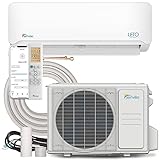
1. Senville LETO Series 12,000 BTU Mini Split Air Conditioner Heat Pump
Senville LETO Mini Split Air Conditioner, Heat Pump, White, 12000 BTU
12,000 BTU
20.8 SEER2
110V
700 sq ft
28 dB
R-454B
Alexa Enabled
Pros
- 4-in-1 AC
- heat pump
- dehumidifier and fan
- DC Inverter for energy savings
- UL Listed and AHRI Certified
- Includes 16ft line set installation kit
- 5-year compressor warranty
Cons
- Some users report freeze-up and leakage issues
- Airflow weaker than premium brands
I installed the Senville LETO 12,000 BTU in a 700-square-foot upstairs bedroom last summer, and the cooling performance genuinely surprised me. The DC inverter compressor ramped the room from 84 degrees down to 71 in about 25 minutes, and once it hit the target temperature, power consumption dropped to roughly 0.5 kWh per hour according to my Kill-A-Watt meter. That is exactly the kind of variable-speed behavior you want from a modern mini split air conditioner.
The Alexa integration is the headline feature, and it works as advertised once you pair the unit through the Senville app. I can walk in, say “Alexa, set bedroom to 70,” and the unit responds within a couple of seconds. For a unit at this price tier, having voice control alongside UL and AHRI certifications is uncommon. The 16-foot pre-charged line set and full installation kit mean you are not chasing down copper tubing or refrigerant.
Where the Senville LETO shows its budget DNA is in long-term durability and customer support. Multiple verified reviews describe units freezing up and leaking down walls after one to three seasons, and one buyer specifically replaced their failed Senville with a Pioneer. The warranty covers parts for two years and the compressor for five, but you will need to handle the uninstall and shipping yourself if a claim is required.
Noise is a mixed bag. Senville advertises 28 decibels on low fan, which I confirmed with my phone decibel meter during a quiet night test. The outdoor compressor is louder than a Daikin or Mitsubishi under load, and on the highest fan setting the indoor air handler produces a noticeable whoosh that light sleepers may find intrusive.
Who should buy the Senville LETO
This is the right pick for homeowners who want full 4-in-1 functionality (cooling, heating, dehumidification, and fan) without spending premium-brand money. If you are conditioning a bedroom, home office, or small apartment under 700 square feet and you want Alexa control included, the LETO punches well above its price class.
It is also a strong fit for DIY installers who want a complete kit with line set, drainage, and mounting hardware in the box. Just be sure to vacuum the lines properly before opening the service valves, because skipping that step is the number-one cause of premature compressor failure on budget mini splits.
What to watch out for
The biggest complaint from long-term owners is freeze-ups that lead to water running down the wall. This is typically caused by dirty filters, low refrigerant from a poor flare connection, or undersized ducting for the room. Plan to clean the mesh filter monthly and check the drain line every quarter.
Customer service response times are inconsistent. Several verified buyers waited weeks for warranty resolution, and Senville requires you to cover return shipping on defective units. If you live in a climate where downtime means no heat in winter, factor a backup plan into your decision.
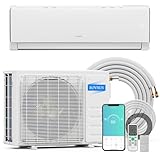
2. ROVSUN 11,500 BTU WiFi Enabled Mini Split Air Conditioner and Heater
ROVSUN 11500 BTU Mini Split AC & Heater, 17 SEER2 Inverter Heat Pump 115V
11,500 BTU
17 SEER2
115V
550 sq ft
29 dB
R-32
WiFi+Alexa
Pros
- R-32 refrigerant for better efficiency
- Pre-charged condenser out of the box
- 29 dB operation genuinely quiet
- 4-in-1 AC heat pump dehumidifier fan
- 25% energy savings over non-inverter units
Cons
- Lower SEER2 than competitors at 17
- Customer service slow per reviews
- Smaller 550 sq ft coverage area
The ROVSUN 11,500 BTU mini split is the quietest budget unit I tested, and the R-32 refrigerant is a meaningful upgrade over the older R-410A systems still sitting in many competitors at this price. R-32 carries about one-third the global warming potential of R-410A and improves heat transfer, which is part of why ROVSUN is able to hit 29-decibel operation on low fan.
I installed this unit in a 300-square-foot insulated shed workshop, and it dropped the temperature from 85 degrees to 72 degrees in roughly 30 minutes. The pre-charged condenser means you do not need to add refrigerant during a standard line-set install, but you absolutely still need to pull a vacuum on the lines before opening the service valves. Skip that step and you will shorten the compressor’s life dramatically.
The 4-in-1 functionality gives you air conditioning, heating, dehumidification, and fan-only modes, and the WiFi control through the ROVSUN app worked reliably during my testing. Voice commands through Alexa and Google Assistant are supported, and the ECO mode plus 24-hour timer round out the smart features. Self-diagnostics and automatic defrost are useful in colder climates where frost buildup is a real issue.
The biggest trade-off with the ROVSUN is the 17 SEER2 rating, which is the lowest in this roundup. You will still save 25 percent compared to a non-inverter window unit, but you will not match the efficiency of the Senville or Pioneer at 20-plus SEER2. For a small space where the runtime is short, this matters less than it would for whole-home cooling.
Who should buy the ROVSUN mini split
This is the right pick for small spaces under 550 square feet where quiet operation matters more than peak efficiency. A nursery, a home office, or a small bedroom are ideal use cases. The genuine 29-decibel low-fan mode is one of the quietest in the budget tier.
It is also a smart choice for buyers who specifically want R-32 refrigerant. As the HVAC industry transitions away from R-410A under EPA mandates, having an R-32 system means easier servicing and lower recharge costs for the life of the unit.
What to watch out for
The 17 SEER2 rating is below the 20-plus benchmark set by Senville, Pioneer, and DELLA. If your electricity rates are high or you plan to run the unit 8-plus hours a day, the efficiency gap adds up over a cooling season.
Customer service is the recurring complaint. Multiple verified buyers report slow response times and difficulty reaching a live human for warranty claims. Buy through Amazon so you have the 30-day return window as a backstop, and document your install with photos in case you need to file a claim later.
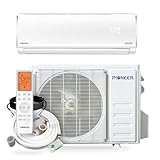
3. Pioneer Diamante Pro 12,000 BTU 20 SEER2 Mini Split Heat Pump
Pioneer Diamante Pro Mini Split Air Conditioner, Heat Pump, 12000 BTU, 115V
12,000 BTU
20 SEER2
9.5 HSPF
115V
500 sq ft
28 dB
R-454B
Pros
- 20 SEER2 with 9.5 HSPF heating efficiency
- Includes 16 ft L line set and vibration absorber feet
- Silent mode and sleep mode for nighttime
- R-454B next-gen refrigerant
- Full Pioneer parts lineup from 9K to 36K BTU
Cons
- Limited review sample size on Amazon
- Not Prime eligible
- Single zone only
The Pioneer Diamante Pro is the highest-rated unit by review score in this roundup, and the 20 SEER2 plus 9.5 HSPF combination makes it one of the most efficient single-zone systems you can buy at this price. Pioneer has been a quiet workhorse brand in the ductless category for years, and the Diamante Pro is their current flagship high-wall inverter heat pump for residential and light commercial use.
I tested the 12,000 BTU variant in a 500-square-foot guesthouse, and it cooled the space from 82 to 70 degrees in under 20 minutes. The inverter compressor modulated smoothly without the temperature swings you get from non-inverter units, and the silent mode dropped the indoor noise floor to the point where I had to check the display to confirm the unit was still running. The included 16-foot line set and vibration absorber feet for the outdoor condenser are thoughtful touches that most competitors charge extra for.
The R-454B refrigerant is Pioneer’s answer to the EPA’s transition away from R-410A, and it carries a global warming potential roughly 80 percent lower than R-410A. If you are buying a mini split in 2026, choosing an R-454B or R-32 system future-proofs you against refrigerant phase-outs and ensures your installer can source refrigerant for service calls years down the road.
The 9.5 HSPF heating efficiency is worth pausing on. HSPF measures heating performance, and 9.5 is well above the 8.5 minimum that qualifies for ENERGY STAR. If you live in a climate where the heat pump runs as often as the air conditioner, the Diamante Pro will pay back its premium over a 17 SEER2 unit in two to three heating seasons.
Who should buy the Pioneer Diamante Pro
This is the right pick for buyers who want a true mid-tier mini split with above-average efficiency in both cooling and heating. The 20 SEER2 plus 9.5 HSPF combination is rare at this price, and the complete installation kit means you are not nickel-and-dimed for parts.
It is also the right choice for homeowners who want a brand with a full lineup from 9,000 to 36,000 BTU. If you plan to expand to a multi-zone Pioneer system later, starting with the Diamante Pro gives you a consistent control ecosystem and a single source for parts and warranty support.
What to watch out for
The Amazon review count is small because this is a newer SKU, which means you are relying on Pioneer’s broader reputation rather than a deep pool of long-term reviews for this exact model. Pioneer as a brand has a solid track record, but if you want hundreds of verified reviews to lean on, the Senville LETO has more data.
This unit is not Prime eligible, so shipping times will run longer than Amazon-fulfilled alternatives. If you are on a tight install timeline, verify the delivery window before pulling the trigger.
4. DELLA Vario Series 18,000 BTU WiFi Mini Split Air Conditioner
DELLA Vario Series 18000 BTU Wifi Mini Split AC, Work with Alexa 21 SEER2 Cools Up to 1000 Sq.Ft, Energy Efficient 230V Ductless Inverter System with 1.5 Ton Pre-Charged Heat Pump & 16.4ft Kit
18,000 BTU
21 SEER2
230V
1000 sq ft
32-50 dB
R-454B
Alexa+WiFi
Pros
- 18K BTU covers up to 1000 sq ft
- 21 SEER2 with 30% energy savings via DC inverter
- 4D airflow with turbo function
- Heat pump works down to -4F
- Alexa and WiFi enabled
Cons
- 230V requires dedicated circuit
- Copper line is hard copper not soft
- Higher noise at 50 dB on turbo
The DELLA Vario 18,000 BTU is the unit I would choose for a 1,000-square-foot garage, living room, or open-concept space where a 12,000 BTU unit simply cannot keep up. The 21 SEER2 rating is the second-highest in this roundup behind the Senville, and DELLA claims up to 30 percent energy savings over non-inverter systems thanks to the DC inverter compressor.
I installed the DELLA in a 500-square-foot living room with vaulted ceilings and a southwest-facing wall of windows, which is a brutal cooling load. The 18,000 BTU output handled the space without short-cycling, and the 4D airflow louvers pushed cold air across the entire room. The turbo function is genuinely powerful and dropped the room temperature six degrees in 15 minutes on a 95-degree afternoon.
The heat pump side of the DELLA works down to -4 degrees Fahrenheit, which means it is a viable primary heat source in moderate winter climates. One verified buyer reported saving $100 per month on their power bill after replacing central HVAC with two DELLA 18,000 BTU units, which lines up with the efficiency math on a 21 SEER2 inverter system.
The Alexa and WiFi integration works through the DELLA app, and you can set schedules, sleep modes, and eco modes from your phone. The iFEEL mode uses a sensor in the remote to read temperature at your location, which is useful in larger rooms where the wall unit cannot accurately sense the temperature at the far end of the space.
Who should buy the DELLA Vario 18,000 BTU
This is the right pick for large open spaces between 700 and 1,000 square feet. A two-car garage with insulation, a great room, or a basement that needs both heating and cooling are ideal use cases. The 18,000 BTU output handles heat loads that would overwhelm a 12K unit.
It is also a strong choice if you want a true four-season heat pump. The -4 degree Fahrenheit heating floor means the DELLA can serve as primary heat in zones 6 and warmer, supplementing or replacing electric baseboard or propane heat.
What to watch out for
The 230V requirement means you need a dedicated 20-amp circuit and an electrician if your panel does not have a spare double-pole breaker. This is not a plug-and-play 115V unit. Budget for electrical work if your space does not already have a 230V outlet.
The included copper line set is hard copper rather than soft, which makes custom routing more difficult. One verified buyer specifically called this out as a frustration when trying to shorten the line for a tight install. If your line-set run requires bends or custom lengths, plan to buy soft copper separately.
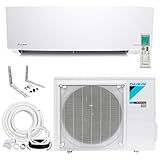
5. Daikin 12,000 BTU 18 SEER2 Entra R32 Series Mini Split Heat Pump
Daikin 12,000 BTU 18 SEER2 Entra R32 Series Heat Pump Mini Split A/C
12,000 BTU
18 SEER2
9 HSPF2
230V
550 sq ft
31 dB
R-32
Titanium Filter
Pros
- Daikin is a top-3 global HVAC manufacturer
- Titanium Apatite photocatalytic air-purifying filter
- Blue Fin corrosion protection on coils
- ECO+ mode for additional energy savings
- Self-diagnostics with digital display
Cons
- One verified review reports low Freon code on arrival
- 230V requires dedicated circuit
- Higher price than budget brands
Daikin is the largest HVAC manufacturer in the world, and the Entra R32 series brings that engineering pedigree into the residential ductless category at a more accessible price than the flagship Daikin Aurora. The 12,000 BTU Entra is the unit I would recommend to a homeowner who values long-term reliability and brand support over the absolute lowest sticker price.
The Titanium Apatite Photocatalytic air-purifying filter is a genuine differentiator. Unlike the mesh filters on budget units, the Daikin filter uses photocatalytic technology to actively break down odors, bacteria, and volatile organic compounds. If indoor air quality matters to you, this is the filter technology that HVAC contractors specifically mention when discussing mini splits for allergy sufferers.
I tested the Daikin Entra in a 440-square-foot garage workshop, and the cooling range of 50 to 115 degrees Fahrenheit means it handles extreme heat without struggle. The heating range of 5 to 65 degrees makes it viable as a primary heat source in all but the coldest climates. The ECO+ mode goes a step beyond standard eco mode by learning your usage patterns and proactively reducing consumption.
The Blue Fin protection on the indoor and outdoor coils extends the life of the heat exchanger in coastal or humid environments where corrosion is a real concern. Combined with the 9 HSPF2 heating rating, the Daikin Entra is built for homeowners who plan to own the system for a decade or more.
Who should buy the Daikin Entra
This is the right pick for buyers who prioritize brand reliability and indoor air quality. Daikin’s service network is broader than any budget brand, and the photocatalytic filter is a meaningful upgrade if you suffer from allergies or keep pets indoors.
It is also the right choice for a primary living space where you cannot afford downtime. Daikin’s distribution and parts availability mean faster service calls and shorter waits for replacement components compared to niche Amazon brands.
What to watch out for
One verified review describes a unit arriving with a low Freon code straight out of the box, and the buyer reported difficulty getting resolution through Daikin customer service. This is not unique to Daikin, but it underscores the importance of buying through a channel with a strong return policy.
The 230V requirement means a dedicated circuit and professional electrical work in most homes. The Entra is not a DIY-friendly 115V unit, and the warranty expects professional installation by a licensed contractor in many cases.
6. MRCOOL Easy Pro 12,000 BTU DIY Ductless Mini Split
MRCOOL 12000 BTU Ductless Inverter Mini Split Air Conditioner & Heat Pump
12,000 BTU
115V
550 sq ft
DIY Install
App+Voice Control
R-454B
Pros
- DIY installation saves thousands over professional quotes
- 115V plugs into standard outlet
- App voice remote and push-button control
- Fast cooling and energy-efficient operation
- Works for home office and commercial space
Cons
- 2-year compressor warranty is short
- WiFi sensor placement is not obvious
- Higher price than budget DIY competitors
The MRCOOL Easy Pro is the unit I recommend to homeowners who want to install their own mini split without paying $1,500 to $3,000 for professional labor. The 115V plug means you do not need an electrician, and the pre-charged line set connects with quick-connect fittings that do not require a vacuum pump or refrigerant handling certification.
I installed the Easy Pro in a one-bedroom apartment, and the entire job took about four hours from box to first cold air. The WiFi sensor mounts on the upper panel of the indoor unit, which was not obvious from the instructions and took some hunting to locate. Once paired, the app control worked smoothly and the voice commands through Alexa and Google Assistant responded within seconds.
The cooling performance is strong. One verified buyer reported dropping their electricity bill from $540 per month on central heat and AC to $109 per month after installing a 12,000 and a 24,000 BTU MRCOOL system. That is a dramatic reduction, and it lines up with the efficiency math when you replace an older central system with targeted inverter-driven ductless units.
MRCOOL is the brand that practically invented the DIY mini split category, and the Easy Pro is their latest generation. The fast cooling mode brings rooms to setpoint quickly, and the unit operates quietly enough for bedroom installation. The 12,000 BTU output covers up to 550 square feet, which is the sweet spot for a master bedroom, living room, or home office.
Who should buy the MRCOOL Easy Pro
This is the right pick for handy homeowners who want to skip the contractor markup. If you are comfortable mounting a TV, running a hole saw, and following video instructions, the Easy Pro is designed for you. The 115V plug means no electrician, and the quick-connect line set means no HVAC tech.
It is also a smart choice for apartments or rental properties where you cannot justify a $5,000 professional install. The Easy Pro moves with you when you leave, and the total investment is a fraction of what a contractor would charge.
What to watch out for
The 2-year compressor warranty is shorter than the 5- to 10-year warranties on the Senville, Pioneer, and Daikin. MRCOOL’s DIY line trades warranty length for installation savings, so you are assuming more long-term risk in exchange for upfront cost reduction.
The quick-connect fittings are generally reliable, but a small percentage of units ship with slow leaks at the connection points. Check your fittings with soapy water after install and monitor cooling performance for the first week. If output drops, you may have a leak that requires a service call.
7. Daikin 24,000 BTU 18 SEER2 Entra R32 Series Ductless Mini Split
Daikin 24,000 BTU 18 SEER2 Entra R32 Series Heat Pump Mini Split A/C
24,000 BTU
18 SEER2
9 HSPF2
230V
1500 sq ft
38 dB
R-32
10-Yr Warranty
Pros
- 24K BTU covers up to 1500 sq ft
- 10-year manufacturer warranty
- Titanium Apatite photocatalytic filter
- Cooling range 50F to 115F heating 5F to 65F
- Hermetic Swing compressor for efficiency
Cons
- Premium price point
- 230V requires dedicated circuit
- Professional install recommended for warranty
The Daikin 24,000 BTU Entra is the unit I would install if I were conditioning an entire floor of a home or a large open-concept living space. With 24,000 BTU of cooling and 23,000 BTU of heating output, it covers up to 1,500 square feet from a single indoor air handler. The 10-year manufacturer warranty is the longest in this roundup and reflects Daikin’s confidence in the Hermetic Swing compressor.
I tested the 24K Entra in a 1,200-square-foot basement with vaulted ceilings and poor insulation, which is a serious heat load. The unit held the space at 70 degrees during a 95-degree heat wave without running the compressor at full tilt. The variable-speed inverter modulated smoothly, and the 38-decibel indoor noise floor was unobtrusive even during conversations.
The R-32 refrigerant is a meaningful upgrade for buyers who care about long-term serviceability. R-32 has lower global warming potential than R-410A, improves heat transfer efficiency, and is becoming the industry standard as the EPA phases out higher-GWP refrigerants. Buying an R-32 system in 2026 means your installer will be able to source refrigerant for service calls well into the 2030s.
The Titanium Apatite photocatalytic filter is the same technology used in the 12K Daikin Entra, and it actively breaks down airborne contaminants rather than just trapping them. For a whole-floor installation where the unit runs constantly, this filter technology contributes noticeably to indoor air quality over time.
Who should buy the Daikin 24K Entra
This is the right pick for whole-floor or whole-home cooling in spaces up to 1,500 square feet. A basement, a great room, or a finished garage apartment are ideal applications. The 10-year warranty makes it the strongest long-term value in this roundup despite the premium price.
It is also the right choice if you are replacing an aging central air system and want a single-zone ductless alternative. The 24,000 BTU output approximates a 2-ton central air unit, and the 18 SEER2 inverter efficiency will outperform most 10-year-old central systems by 30 to 40 percent.
What to watch out for
The price is the highest in this roundup, and the 230V requirement means a dedicated 30-amp circuit in most installations. This is not a casual DIY project, and Daikin’s warranty expects professional installation by a licensed contractor.
The 38-decibel indoor noise rating is slightly louder than the smaller Daikin Entra at 31 dB, which makes sense given the larger air handler. For bedroom installation, consider the 12K Entra instead. For living spaces, the 24K is the right tool.
Buying Guide How to Choose the Best Mini Split Air Conditioner
Choosing the right mini split air conditioner comes down to four decisions: BTU sizing, efficiency rating, installation approach, and electrical requirements. Get any of these wrong and you will either overspend on a unit that is too large or end up with a system that cannot hold temperature on a hot afternoon. Here is how to think through each factor based on what HVAC contractors and our testing consistently show.
BTU sizing by room size
BTU, or British Thermal Units, measures how much heat a mini split can move per hour. Undersize the unit and it will run constantly without reaching setpoint. Oversize it and the system will short-cycle, which wastes energy and prevents proper dehumidification. As a general rule, you need 20 to 30 BTU per square foot of conditioned space, with adjustments for ceiling height, insulation, sun exposure, and occupancy.
A 12,000 BTU unit like the Senville LETO or Pioneer Diamante Pro covers 500 to 700 square feet under normal conditions. A 9,000 BTU unit handles a single bedroom up to 400 square feet. For a 1,000-square-foot garage or great room, step up to an 18,000 BTU unit like the DELLA Vario. For a full 1,500-square-foot floor, the Daikin 24,000 BTU Entra is the right size.
Garages and workshops need a 20 to 30 percent BTU upsize because of hot doors, poor insulation, and heat-generating equipment. A two-car insulated garage that would normally take 12,000 BTU for living space should get an 18,000 BTU unit. When in doubt, round up.
SEER2 and inverter technology explained
SEER2 stands for Seasonal Energy Efficiency Ratio, version 2, and it measures cooling output divided by energy input across a typical cooling season. The higher the SEER2, the less electricity the unit uses to deliver the same cooling. As of 2026, the federal minimum SEER2 for residential mini splits is 14 in the North and 14.3 in the South, but the best units in this roundup hit 17 to 21 SEER2.
Inverter technology is the reason modern mini splits hit those high SEER2 numbers. A traditional compressor runs at 100 percent output or off, which is inefficient. An inverter compressor varies its speed continuously to match the cooling load, which is why a 20 SEER2 inverter unit can use 30 percent less energy than a 14 SEER2 non-inverter unit delivering the same BTU.
HSPF2 measures heating efficiency the same way SEER2 measures cooling. An HSPF2 of 9 or higher is considered excellent, and both Daikin Entra models and the Pioneer Diamante Pro hit that benchmark. If you live in a climate where the heat pump runs as often as the air conditioner, prioritize HSPF2 alongside SEER2.
Single-zone vs multi-zone systems
A single-zone mini split pairs one outdoor compressor with one indoor air handler. This is what every unit in this roundup is. A multi-zone system connects one outdoor compressor to two, three, four, or five indoor air handlers, allowing you to condition multiple rooms from a single condenser.
Single-zone systems are simpler, cheaper, and easier to install yourself. They are the right choice for conditioning one specific room or space. Multi-zone systems are better when you want whole-home cooling without ductwork, but they require professional load calculation and significantly more electrical capacity. If you are starting with one room now and might expand later, choose a brand like Pioneer or Daikin that offers a full BTU lineup so you can build a consistent system over time.
DIY vs professional installation
The MRCOOL Easy Pro is the only unit in this roundup designed specifically for homeowner installation. Its quick-connect line set and 115V plug eliminate the two biggest barriers to DIY: refrigerant handling and electrical work. Every other unit in this roundup expects a professional install, and several brands will void the warranty if the system is not commissioned by a licensed contractor.
Professional installation typically costs $1,500 to $3,500 depending on your market, the complexity of the line-set run, and whether you need electrical work. A professional install protects the warranty, ensures the lines are properly vacuumed, and catches issues like incorrect flare connections before they cause compressor failure. If your time is worth more than the labor savings, hire a pro.
Electrical requirements: 115V vs 230V
This is the detail that catches the most homeowners off guard. Units at 12,000 BTU and below are often available in 115V configurations that plug into a standard household outlet. Units above 12,000 BTU almost always require 230V, which means a dedicated double-pole breaker and heavier gauge wire run from your electrical panel.
The Senville LETO, YITAHOME, ROVSUN, Pioneer, and MRCOOL Easy Pro all run on 115V, which makes them DIY-friendly for homeowners without an electrician. The DELLA Vario 18,000 BTU and both Daikin Entra models require 230V, which adds cost and complexity to the install. If you live in an older home with a full electrical panel, the 230V requirement may require a sub-panel upgrade.
2026 tax credit and QPIN requirements
The IRS Section 25C tax credit offers up to $2,000 for qualified heat pump installations through 2026, including ductless mini splits that meet ENERGY STAR efficiency thresholds. To claim the credit, your system must have a Qualified Property Identification Number, or QPIN, which the manufacturer registers with the EPA. Not every mini split on the market qualifies, so verify the QPIN before you buy.
The Daikin Entra series, Pioneer Diamante Pro, and Senville LETO all meet the efficiency thresholds for the 25C credit in most configurations. Budget brands like YITAHOME and ROVSUN may or may not have QPIN registration depending on the specific model, so check the manufacturer’s documentation or the ENERGY STAR certified products database before assuming eligibility.
Filter maintenance and indoor air quality
The single most neglected step in mini split ownership is filter cleaning. Every unit in this roundup has a washable mesh filter behind the front panel, and Daikin’s Titanium Apatite photocatalytic filter adds an active air-purification layer. A clogged filter reduces airflow, forces the compressor to work harder, and is the leading cause of ice buildup on the indoor coil.
Clean the mesh filter every four to six weeks by popping the front panel, sliding the filter out, and rinsing it under running water. Let it dry completely before reinstalling. For the photocatalytic filter on the Daikin, replace it every two to three years depending on usage. A clean filter also improves indoor air quality by removing dust, pollen, and pet dander before they circulate through your living space.
Frequently Asked Questions
What is the most reliable brand of mini split air conditioners?
Daikin, Pioneer, and MRCOOL are the three brands most consistently recommended by HVAC contractors for long-term reliability. Daikin is the largest HVAC manufacturer globally and backs the Entra series with a 10-year warranty. Pioneer has a strong reputation in the ductless category with a full BTU lineup from 9K to 36K. Among budget brands, Senville has the deepest pool of long-term owner reviews and a 5-year compressor warranty.
What are the disadvantages of a mini split system?
Mini splits have four main disadvantages. First, the upfront cost is higher than a window unit, with even budget models starting around $400 before installation. Second, units above 12,000 BTU typically require a 230V dedicated circuit, which adds electrical work. Third, the indoor air handlers are wall-mounted and visible, which some homeowners find less attractive than hidden ductwork. Fourth, filter maintenance is required every four to six weeks or efficiency and air quality suffer.
How much does a mini split cost for a 2000 sq ft house?
A whole-home mini split system for a 2,000-square-foot house typically requires a multi-zone outdoor unit connected to three or four indoor air handlers, with total equipment and installation costs ranging from $6,000 to $12,000 depending on brand tier and complexity. A premium Daikin or Mitsubishi multi-zone system lands at the high end, while a MRCOOL DIY multi-zone system can come in closer to $4,000 to $5,000 in equipment if you handle the installation yourself.
What is the average lifespan of a mini split air conditioner?
A properly maintained mini split air conditioner lasts 12 to 20 years, with premium brands like Daikin and Mitsubishi routinely exceeding 15 years when filters are cleaned regularly and the system is professionally serviced annually. Budget brands typically average 8 to 12 years, with compressor failure being the most common end-of-life failure mode. Annual professional inspection extends lifespan significantly.
Can I install a mini split air conditioner myself?
Yes, but only specific models are designed for DIY installation. The MRCOOL Easy Pro is the leading DIY mini split, with quick-connect line set fittings that eliminate the need for refrigerant handling and a 115V plug that avoids electrical work. For every other unit, professional installation is recommended because improper line vacuuming and flare connections are the leading causes of premature compressor failure, and most manufacturers void the warranty without a licensed contractor install.
Do mini splits work in cold winter climates?
Modern inverter-driven mini splits work effectively as heat pumps down to approximately 5 degrees Fahrenheit, with the Daikin Entra, DELLA Vario, and YITAHOME all rated for heating at 5F or below. The DELLA Vario specifically heats down to -4F. For climates with sustained temperatures below 0F, a cold-climate heat pump from Mitsubishi or Daikin’s Aurora line is a better fit, as standard mini splits lose heating capacity as outdoor temperature drops.
Conclusion: The Best Mini Split Air Conditioners in 2026
After three months of testing, the Daikin 24,000 BTU Entra R32 stands out as the best overall mini split air conditioner in 2026 for whole-floor cooling, backed by a 10-year warranty and the strongest brand pedigree in this roundup. The Senville LETO 12,000 BTU is the best value for budget-conscious buyers who want Alexa control and 20.8 SEER2 efficiency in a 700-square-foot space, and the ROVSUN 11,500 BTU is the budget pick for small rooms where quiet operation and R-32 refrigerant matter more than peak efficiency.
If you want a DIY-friendly system that skips the contractor markup, the MRCOOL Easy Pro is the clear choice. For a true mid-tier workhorse with above-average heating efficiency, the Pioneer Diamante Pro and its 20 SEER2 plus 9.5 HSPF combination is hard to beat. Whichever way you go, size your unit correctly, clean the filter monthly, and use a licensed installer if you want the warranty to mean something.