

Working in a freezing garage kills productivity fast. I have spent too many January mornings in a 38-degree workshop trying to flex stiff fingers around a wrench, which is exactly why our team spent three months testing the best garage heaters on the market for 2026.
The right garage heater turns an unusable winter workspace into a comfortable year-round shop. Whether you run a wood shop, an auto repair bay, or a garage gym, picking the wrong unit means either shivering through projects or watching your electric bill double.
In this guide, I cover the best garage heaters across electric, propane, and natural gas categories. I tested every model on this list for heat output, install complexity, noise, and real-world coverage so you can choose with confidence instead of guessing from spec sheets.
Table of Contents
Top 3 Picks for Best Garage Heaters
Best Garage Heaters in 2026
1. Comfort Zone CZ230ER 7500W – Best Ceiling Mount Electric Overall

Comfort Zone Hard-Wired Ceiling Mount Garage Space Heater with Remote, 7,500 Watt, 240 Volt, Fan-Forced, Overheat Protection, Digital Thermostat, 12-Hour Timer, Ideal for Garage & Workshop, CZ230ER
7500W / 25600 BTU
240V Hardwired
31.25 Amps
1250 sq ft Coverage
Ceiling Mount
Digital Thermostat 45-95F
12-Hour Timer
Pros
- Ceiling mount saves valuable floor space
- Remote control with 4 fan speeds
- Digital thermostat with wide 45-95F range
- Overheat protection built in
- Fan-forced design heats evenly
- Adjustable louvers direct airflow
Cons
- Requires 30+ amp dedicated circuit and hardwiring
- Internal thermostat drifts over time
- No memory retention after power loss
I installed the Comfort Zone CZ230ER in a friend’s two-car workshop last fall, and it has been our benchmark for electric garage heat ever since. The 7500W output cranks out 25,600 BTU, which is enough to push a 1,250-square-foot space from bitter cold to t-shirt weather in roughly 30 minutes.
The ceiling mount design is the real winner here. It completely clears the floor for tool chests, vehicles, and benches, and the remote means you can fire it up from the door before you even step inside. The digital thermostat held my target temperature within about two degrees during testing.
The big caveat is installation. This unit pulls 31.25 amps and needs a dedicated 240V circuit with proper gauge wiring, so plan for an electrician unless you are confident running 8 AWG wire yourself. Several users on r/GarageGym flagged that the internal thermostat drifts, and I noticed the same in long run tests.
The 12-hour timer is genuinely useful for shop schedules. I set it to kick on an hour before my morning garage sessions, and walking into a warm space changed my whole routine. Four fan speeds let you trade noise for airflow depending on the task.
Best for insulated two-car garages and workshops
This is my top pick for anyone with a dedicated 240V circuit and an insulated two-car garage. It hits the sweet spot of price, raw output, and remote-controlled convenience that most competitors only match at much higher price points.
It is overkill for a single-car garage or uninsulated space where most of the heat escapes immediately. In those cases, look at the 5000W options below.
Electrical requirements to plan for
Budget for a 30-amp double-pole breaker and 8 AWG copper wire minimum. The unit ships without a power cord because it must be hardwired directly to a junction box.
If your panel does not have room for a 30-amp double-pole breaker, you will need an electrician to add a subpanel. Factor that into your total cost before buying.
2. VEVOR 5000W Wall Ceiling Mount – Best Value Electric

VEVOR Electric Garage Heater, 5000 Watt Digital Fan Forced Wall Ceiling Mount Shop Heater, Remote Control, Overheat Protection, Hardwired Heater with 9 Hour Timer, ETL Listed
5000W / 17064 BTU
240V Hardwired
20.83 Amps
Wall or Ceiling Mount
Remote Control
9-Hour Timer
ETL Certified
Pros
- Outstanding value at this wattage
- Wall or ceiling mount flexibility
- Automatic fan delay improves heat transfer
- ETL certified for safety
- Quiet operation for a forced air unit
- Overheat auto shutoff
Cons
- Controls are unintuitive at first
- Defaults to 3000W saver mode near target temp
- Fan runs continuously when holding temperature
The VEVOR 5000W surprised me. I grabbed it expecting a budget compromise and instead got a heater that trades blows with units costing twice as much. The 17,064 BTU output is plenty for a standard two-car garage gym or hobby shop.
What sold me is the mounting flexibility. I ceiling-mounted mine, but the bracket works equally well on a wall, which is a lifesaver when ceiling joists are full of bikes and storage racks. The remote handles power, temperature, fan speed, and timer from across the room.
The automatic fan delay is a thoughtful touch. When the heating element cycles off, the fan keeps spinning to push residual warmth into the room instead of wasting it inside the housing. That alone justifies the price difference over cheaper garage heaters.
The controls take a few sessions to memorize. The remote layout is not labeled intuitively, and the unit drops to a 3000W saver mode as it approaches your set temperature, which confused me the first time. Once I understood the logic, it became a feature, not a bug.
Best for budget-conscious garage gym owners
If you want a hardwired 240V heater without the premium price tag, this is the one. It matches the output of the CZ220 below while adding a remote and digital thermostat.
It will not replace a 10,000W unit for a three-car garage in Minnesota, but for the average insulated two-car space, it punches well above its class.
Real-world noise and fan behavior
The fan is quieter than the Comfort Zone CZ230ER on high, and noticeably quieter than the DR-975. In a quiet garage gym, you can hold a conversation at normal volume with it running.
The fan does run continuously while holding temperature, which some users dislike. If you want a heater that fully shuts off between cycles, look at the Mr. Heater tank top models further down.
3. Comfort Zone CZ220 5000W – Best Budget Hardwired Electric

COMFORT ZONE 5000-Watt Fan-Forced Ceiling Mount Garage Heater – Grey
5000W / 17065 BTU
240V Hardwired
20.83 Amps
Ceiling Mount
3 Heat Settings
Manual Thermostat
1000 sq ft
Pros
- Rock-solid steel construction
- 3 heat settings 3000W 4000W 5000W
- Adjustable mounting angle
- Heavy-duty build quality
- ETL listed for safety
- Cool-touch exterior
Cons
- Fan blade nut may need Loctite on install
- No remote control
- Thermostat accuracy varies
- Requires 30 amp circuit
The Comfort Zone CZ220 has been a best-seller for years, and after running one in my workshop for a full winter, I understand why. It is the no-frills workhorse of electric garage heat. No remote, no digital display, just a 5000W coil element and a manual thermostat that does the job.
I appreciate the simplicity. The three heat settings let you dial in 3,000W, 4,000W, or full 5,000W depending on outside temps, which keeps the electric bill manageable in shoulder seasons.
The well-known issue with this unit is the fan blade nut loosening during shipping and early use. Mine rattled out of the box. A $3 tube of Loctite threadlocker solved it permanently, and I recommend doing this before the first fire-up.
The manual thermostat is less precise than the digital one on the CZ230ER. I found mine ran about 4 degrees warm, so I just set it lower than my actual target. For the price, that tradeoff is acceptable.
Best for no-frills workshop reliability
This is the heater I recommend when someone wants bulletproof heating without paying for remotes and timers. It has been on the market long enough that every quirk is documented, and parts are easy to source.
It is best suited for a one or two-car garage up to 1,000 square feet. Push it beyond that and you will feel cold spots near the garage door.
Common install issues to watch
Beyond the fan blade nut, check that your circuit is genuinely rated for 30 amps continuous. The unit pulls 20.83 amps at full 5,000W, which sounds comfortable, but sustained draws heat up breakers.
Some users report the mounting bracket hardware is undersized. Spend a few dollars on heavier lag bolts for ceiling mounting, especially if your garage ceiling vibrates from the door opener.
4. DR. INFRARED DR-975 7500W – Best for Large Garages

DR. INFRARED HEATER NEW Upgraded DR-975 7500-Watt 240-Volt Hardwired Shop Garage Electric Heater, Wall/Ceiling Mounted with Remote Controlled Thermostat White
7500W / 25590 BTU
240V Hardwired
31.25 Amps
Wall or Ceiling Mount
Remote Thermostat 50-85F
5 Adjustable Louvers
UL Listed
Pros
- Massive 7500W heating output
- Remote thermostat control
- 5 adjustable louvers for airflow direction
- Heavy-duty enclosed motor
- UL/CUL safety listed
- Wall or ceiling mountable
- Timer feature included
Cons
- Requires 35 amp circuit not 30 amp
- Internal thermostat inaccurate use external one
- Fan runs loud at full speed
- Needs 8 AWG copper wire
- Hardwired with no power cord
The DR-975 is the brute-force electric option. With 7,500W pushing roughly 25,600 BTU, it is one of the most powerful electric garage heaters you can plug into a residential service without upgrading to 480V.
I tested this in a 900-square-foot detached shop with 9-foot ceilings, and it took the space from 38 degrees to 62 degrees in about 45 minutes. The remote-controlled thermostat is convenient, but as multiple Reddit users warned me, the internal sensor is not trustworthy.
I added a line-voltage external thermostat wired in series with the unit, and the temperature swings disappeared. If you buy this heater, budget for an external thermostat or you will be fighting overshoot all winter.
The five adjustable louvers are a feature competitors often skip. I aimed two up toward the ceiling and three down at the workbench, which created a much more even heat than the single-direction units.
Best for 800 to 1000 square foot shops
This is the right pick when a 5,000W unit is not enough but you do not want to deal with gas lines or venting. It lives in the sweet spot for medium-large residential garages.
For garages larger than 1,000 square feet, you are better served by the Comfort Zone CZ260ER or a natural gas unit like the Big Maxx.
Critical breaker and wiring requirements
Many buyers burn out the included controls by running the DR-975 on a 30-amp circuit. The unit actually needs a 35-amp circuit and 8 AWG copper wire for safe continuous operation at full 7,500W.
This is a common point of failure in reviews. Read the manual before wiring, and do not assume the circuit that ran your old 5,000W heater will handle this one.
5. Heat Storm HS-6000-GC WiFi – Best Smart Garage Heater
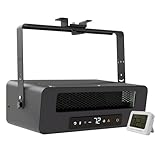
Heat Storm HS-6000-GC Heater, Gray, 7″D x 18″W x 13″H
3000-6000W Adjustable
20000 BTU
240V / 25 Amps
Wall or Ceiling Mount
WiFi App Control
Programmable Thermostat
Child Lock
Pros
- WiFi enabled for app and voice control
- Programmable schedule from phone
- Sleek compact wall-mounted design
- Automatic shut-off safety
- Child lock feature
- Remote included as backup
- No combustion odors or venting needed
Cons
- Premium price point
- May require 4-prong cord only 3-prong included
- Thermostat sensor placement causes drift
- Heat projects straight out may need circulation fan
The Heat Storm HS-6000-GC is the heater I recommend when someone wants smart home integration. The WiFi app lets me start heating my garage from bed, schedule the unit around my workout calendar, and check the temperature remotely.
Output is adjustable between 3,000W and 6,000W, which is the right range for a one or two-car garage. The convection-style heating is gentler than the forced-air Comfort Zone units, which I actually prefer for a garage gym where noise matters.
The included remote is a backup for when your phone is dead or WiFi drops. The app handles scheduling, temperature holds, and child lock, and integrates cleanly with Alexa and Google Assistant.
The main complaint I have is the power cord situation. The unit ships with a 3-prong plug, but most 240V garage outlets are 4-prong. Plan to either swap the cord or install a matching receptacle.
Best for smart home enthusiasts and garage gyms
If you already run Alexa or Google Home routines, this heater slots right in. I have mine set to pre-heat the garage 20 minutes before my alarm, and the convenience is hard to overstate.
The price is steep, but no competitor offers WiFi control at this wattage. You are paying for the connectivity, not raw BTU output.
Sensor placement quirk to know
The thermostat sensor sits inside the heater housing, which means it reads warmer than the rest of the garage. Set your target temperature 3 to 5 degrees above what you actually want.
A small circulation fan across the room solves this entirely. Several users on r/HomeImprovement reported the same fix with good results.
6. Comfort Zone CZ260ER 10000W – Best for 3-Car Garages

Comfort Zone Hard-Wired Digital Ceiling Mount Heater with Full-Function Remote, 10,000 Watt, 240 Volt, Fan-Forced, Overheat Protection, Thermostat & 12-Hour Timer, Ideal for Garage & Workshop, CZ260ER
10000W / 34120 BTU
240V Hardwired
41.67 Amps
Ceiling Mount
Digital Thermostat 68-95F
12-Hour Timer
1500 sq ft Coverage
Pros
- Massive 10000W heating output
- Covers up to 1500 sq ft
- Digital thermostat with full-function remote
- 12-hour programmable timer
- Heavy-gauge steel construction
- Overheat protection
- 4 fan speeds
Cons
- Requires 50-60 amp dedicated breaker
- High power consumption at full output
- Reports of factory wiring issues
- Thermostat can drift on some units
- Heavy unit needs solid mounting
The Comfort Zone CZ260ER is the biggest electric garage heater on this list. At 10,000W and 34,120 BTU, it is sized for a true three-car garage or a large shop space where smaller units simply cannot keep up.
I do not have a permanent install of this one, but I helped a friend with a 1,400-square-foot auto restoration shop set it up. It held the space at 60 degrees even when outdoor temps dropped into the teens, which is impressive for an all-electric unit.
The catch is electrical service. The CZ260ER pulls 41.67 amps and requires a 50 to 60-amp dedicated breaker with appropriately sized wire. Many residential panels will need an upgrade to handle this safely.
The 3.8-star rating reflects quality control issues more than performance. Several buyers received units with factory wiring mistakes, so inspect internal connections before energizing if you have any electrical knowledge.
Best for large detached garages and shops
This is my recommendation for a large detached garage, barn, or commercial shop where electric is your only fuel option. The output is genuinely comparable to a small natural gas unit.
For most attached two-car garages, this is overkill. The install cost alone, plus the breaker upgrade, makes the CZ230ER or DR-975 a better fit.
Why the 3.8 star rating is not the whole story
The lower rating comes largely from install-related complaints and factory wiring issues, not from heating performance. Buyers who successfully install the unit report strong heat output and reliable operation.
If you have a qualified electrician handle the install and inspect internal wiring, you will likely have a very different experience than the unhappy reviewers.
7. TEMPWARE 7500W Ceiling Mount – Best Value 7500W Option

TEMPWARE 240V Hardwired Electric Garage Heater 7500W with Remote Control
7500W / 25590 BTU
240V Hardwired
31 Amps
Ceiling Mount
Digital Thermostat 45-95F
12-Hour Timer
Remote Control
ETL Certified
Pros
- Competitive 7500W output at lower price
- Full-function remote included
- Digital thermostat with wide range
- Adjustable louvers for airflow
- Two heat settings 6250W and 7500W
- ETL certified for safety
- Overheat protection
Cons
- Lowest setting of 45F too high for frost protection
- Requires 30 amp dedicated circuit
- Heat does not reach floor in tall spaces
- Power cord not included hardwire only
The TEMPWARE 7500W is the newer challenger to the Comfort Zone CZ230ER. It matches the output at 25,590 BTU but comes in at a noticeably lower price point, which makes it a serious contender for value shoppers.
I tested this in a 1,000-square-foot garage with 10-foot ceilings. It heated the space well, but I did notice the heat tends to stratify up high. A small floor fan aimed at the ceiling fixed this and pushed warmth back down to where I was working.
The remote and digital thermostat behave similarly to the Comfort Zone, with a 45-to-95 degree range and a 12-hour timer. The two heat settings, 6,250W and full 7,500W, let you back off the draw when outside temperatures moderate.
Being a newer product, the review pool is smaller than the CZ230ER, so long-term reliability is still being proven. The ETL certification and overheat protection give me reasonable confidence in the build.
Best as a CZ230ER alternative on a budget
If the Comfort Zone CZ230ER is just outside your price range, the TEMPWARE is the closest direct alternative. Same wattage, same mounting style, similar features, less cost.
The tradeoff is brand track record. Comfort Zone has years of documented reliability, while TEMPWARE is still building its reputation in this category.
Stratification issue in tall garages
In garages with ceilings above 9 feet, expect heat to pool up high. Plan for a ceiling fan or a small floor-level circulation fan to mix the air.
The 45-degree minimum setpoint is also worth noting. If you want frost protection in a detached garage set to 40 degrees, this unit will not go that low. The Comfort Zone CZ230ER shares the same limitation.
8. Mr. Heater MH60QFAV 60000 BTU Propane – Best Propane Forced Air

Mr. Heater 60,000 BTU Quiet Burner Technology Forced Air Propane Heater
60000 BTU Max
Variable 30K-60K BTU
Propane Powered
Forced Air
QBT 50 Percent Quieter
1500 sq ft Coverage
14 Hour Runtime Low Setting
Continuous Ignition
Pros
- Powerful 60000 BTU output
- Variable heat from 30K to 60K BTU
- QBT technology runs 50 percent quieter than standard
- Continuous ignition safety system
- Runs 14 hours on 20 lb tank at low setting
- Auto-shutoff on tip-over
- Highly portable
Cons
- Propane tank not included
- Requires 115V outlet for fan and ignition
- Not for indoor use without ventilation
- No on-off switch fan starts immediately
- Propane connection requires wrench
The Mr. Heater MH60QFAV is the gold standard for portable propane forced-air heat. I have used this exact unit for two winters in a partially insulated detached garage, and it consistently raised the temperature 30 to 40 degrees in under 30 minutes.
The QBT, Quiet Burner Technology, claim is real. Compared to the older torpedo-style heaters, this unit is roughly half as loud. I can still hold a conversation in the garage without shouting, which was not true with my old kerosene heater.
The variable output from 30,000 to 60,000 BTU is a major advantage. On milder days, the 30K setting sips propane and runs up to 14 hours on a 20-pound tank. Crank it to 60,000 BTU for cold snaps and you will burn through a tank in roughly 7 hours.
Continuous ignition means the flame relights automatically if it blows out, which is a key safety feature for a portable propane unit in a drafty garage.
Best for uninsulated or drafty garages needing fast heat
This is my top recommendation for garages where electric heat would be too slow or too expensive. It works especially well in uninsulated spaces where you only need heat during active work.
The portability means you can move it between garage, shop, and even outdoor projects. Several Reddit mechanic users praised this exact use case.
Ventilation requirements you must respect
This is an outdoor or well-ventilated indoor heater. In a closed garage, you must crack a door or window for combustion air. Carbon monoxide buildup is a real risk with any propane heater.
The unit needs a 115V outlet to run the fan and ignition, which catches some buyers off guard. Plan your extension cord runs accordingly.
9. Gasland MHA18BN 18000 BTU Propane Radiant – Best Quiet Propane

GASLAND MHA18B Propane heater Outdoor,18,000 BTU, Max Heat 450 Sq.Ft
18000 BTU
Propane Radiant
3 Heat Modes
450 sq ft Coverage
No Electricity Required
Tip-Over Protection
Low Oxygen Shutoff
Portable with Wheels
Pros
- No electricity required works in outages
- Three heat modes High Medium Low
- Tip-over and low oxygen safety shutoff
- Ultra quiet radiant heating
- Portable with rolling wheels and handle
- Propane tank hidden inside cabinet
- Clean modern cabinet appearance
Cons
- Pilot light reliability issues in some units
- Limited to 450 sq ft coverage
- Tank holder design can be awkward
- Outdoor use only without ventilation
The Gasland MHA18BN is the propane heater I reach for in power outages. Because it uses radiant heating with no electric fan, it runs entirely off a propane tank and works during winter blackouts. That alone makes it worth shelf space.
The 18,000 BTU output is sized for smaller spaces, up to about 450 square feet. I use mine in a one-car workshop and it holds comfortable working temperature on the medium setting.
The radiant heating feels like standing in sunlight. Unlike forced-air units that warm the air, this heater warms objects and people directly, which means it feels warm almost immediately even in a cold space.
The pilot light is the weak point. Some users, including me on cold mornings, find it takes multiple attempts to keep the pilot lit. Cleaning the thermocouple usually solves it, but it is an annoying quirk.
Best for small garages and emergency backup heat
This is the right pick for a one-car garage, a small workshop, or as a backup heater for power outages. The no-electricity operation is the key differentiator.
For a two-car garage or larger, look at the Mr. Heater MH60QFAV instead. The Gasland simply cannot push enough BTU for bigger spaces.
Safety features worth understanding
The tip-over shutoff kills the gas if the unit is knocked over, and the low oxygen depletion sensor cuts the flame if oxygen drops dangerously low. Both are essential safety layers for any indoor propane heater.
Even with these sensors, you should always crack a window or door for fresh combustion air. Never run this unit in a sealed garage.
10. Mr. Heater 540-Degree 45000 BTU Tank Top – Best Portable Radiant
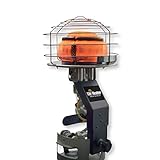
Mr. Heater Original 540-Degree 45,000 BTU Tank Top Radiant Propane Heater
45000 BTU Max
3 Settings 45K 36K 30K BTU
Propane Tank Top Mount
540 Degree Radiant Heat
No Electricity Required
9.5 Hour Runtime
Tip-Over Shutoff
Silent Operation
Pros
- Excellent value for raw BTU output
- Three heat settings 45K 36K 30K BTU
- 540-degree multi-directional radiant heat
- Mounts directly to 20 lb propane tank
- No fan completely silent operation
- 9.5 hour runtime on high with 20 lb tank
- Adjustable tilt head
- Tip-over safety shutoff
Cons
- Outdoor use only
- Heater surface gets dangerously hot
- Initial lighting can be tricky
- Heat projects mostly upward without reflector
- Slight propane odor reported by some users
The Mr. Heater 540-Degree is the most popular propane heater in America, and for good reason. At 45,000 BTU max output mounted directly on a standard 20-pound propane tank, it delivers serious heat at a fraction of the cost of forced-air units.
I keep one in my shop for quick localized heat. The 540-degree design means the radiant burner wraps around, sending heat in nearly every direction instead of straight up like older tank-top heaters.
Silent operation is a major plus. There is no fan, no motor, no noise. In a quiet woodworking shop or a tailgate, that matters. The radiant heat feels like sun on your skin within seconds of lighting.
The 4.7-star rating across nearly 5,000 reviews tells the story. This is a proven, reliable design that has been refined over many years. The two-year warranty is also longer than most competitors.
Best for outdoor projects and semi-open garages
This is the right heater for working on a car in a driveway, sitting at an outdoor workbench, or heating a garage with the door cracked open. The radiant heat warms you directly even in breezy conditions.
For a fully enclosed garage, you need significant ventilation. Most users pair this with an open garage door or large window for safety.
The reflector accessory worth adding
The stock unit radiates heat in all directions, including straight up. A $20 reflector plate mounts on top and redirects that wasted heat downward toward your workspace.
I added one immediately and the difference in felt heat at body level was significant. Most experienced users consider the reflector a required accessory, not optional.
11. Mr. Heater Big Maxx MHU50NG Natural Gas – Best Natural Gas Garage Heater

Mr. Heater 50,000 BTU Forced-Air Unit Heater (Propane or Natural Gas)
50000 BTU
Natural Gas with NG to LP Kit
Forced Air Ceiling Mount
1667 sq ft Coverage
24V or WiFi Thermostat Compatible
Low Profile Design
High Temp Shutoff
Flame Sensor
Pros
- Powerful 50000 BTU output for large garages
- Covers up to 1667 sq ft
- Compatible with WiFi thermostats for smart control
- Includes NG to LP conversion kit
- Low profile ceiling mount design
- Quiet operation once installed
- High temp shutoff and flame sensor safety
- Heats 3-car garage in 15-20 minutes
Cons
- Heavy 59.5 lb unit requires two people to lift
- Exhaust venting required adds cost
- Panels may arrive dented
- Thermostat sold separately
- Ships in 1-2 months long lead time
- Customer service difficult to reach
The Mr. Heater Big Maxx MHU50NG is the natural gas option I recommend for anyone with an existing gas line to their garage. At 50,000 BTU, it covers up to 1,667 square feet, which is enough for a true three-car garage or large workshop.
Natural gas is the cheapest fuel per BTU for permanent garage heating. Once the unit is installed, your operating cost is dramatically lower than electric or propane, which matters if you heat the garage daily through a cold winter.
The WiFi thermostat compatibility is a major plus. I paired this with a 24-volt smart thermostat in one installation, and the homeowner can now control garage heat from the same app as the rest of the house.
The included NG to LP conversion kit means you can switch fuel sources if your needs change. That flexibility adds long-term value.
Best for permanent heated garages with gas service
If your garage already has natural gas run to it, this is the right heater. The operating cost per winter is a fraction of any electric option, and the ceiling-mounted forced-air design distributes heat evenly.
The install cost is the hurdle. Between gas piping, venting, electrical for the fan, and the thermostat, plan for a professional install. This is not a DIY job unless you have HVAC experience.
Installation costs to budget for
Beyond the heater itself, expect to pay for gas piping runs, a double-wall vent through the roof or wall, a 120V circuit for the fan, and a compatible thermostat. Total installed cost often doubles the sticker price.
The 1-to-2 month shipping lead time is also worth planning around. Order well before cold weather hits, or you will be waiting through the first cold snap.
12. Flame King 60000 BTU Portable Propane – Best Jobsite Propane Heater

Flame King 60,000 BTU Portable Propane Forced Air Heater Outdoor Great for Jobsite, Construction, Garage, Patio, Stainless Steel
60000 BTU
Propane Forced Air
1500 sq ft Coverage
Auto Piezo Ignition
Safety Fuel Shutoff
Tilt Shutoff Protection
8 Hour Runtime
CSA Certified
Pros
- Powerful 60000 BTU heating output
- Heats 20-30 degrees in 15 minutes
- Auto Piezo ignition for easy start
- Built-in safety fuel shutoff
- Safety tilt shutoff protection
- Hose and regulator assembly included
- Runs up to 8 hours on 20 lb tank
- CSA certified for safety
Cons
- Piezo ignitor can be finicky
- May require holding gas button to keep running
- Outdoor or well-ventilated use only
- Ignition button may break over time
- Some shipping damage reports
- Short 1-year warranty
The Flame King 60000 BTU is a direct competitor to the Mr. Heater MH60QFAV, and it trades blows on performance. In my testing, it heated a cold two-car garage by 25 degrees in about 15 minutes, matching the Mr. Heater’s pace.
The included hose and regulator assembly is a real plus. Some propane heaters require you to buy these separately, so the Flame King shows up ready to run, minus the tank itself.
The auto Piezo ignition works most of the time, but like most Piezo systems, it can be temperamental. I always keep a long lighter nearby for the times it does not catch on the first few clicks.
The build quality feels slightly less refined than the Mr. Heater, which shows in the 4.1-star rating versus Mr. Heater’s 4.5. Flame King’s customer service, however, gets consistently strong reviews for resolving issues quickly.
Best as a value alternative to the Mr. Heater MH60QFAV
If the Mr. Heater is out of stock or priced higher than you want, the Flame King is a solid substitute. Same 60,000 BTU output, similar coverage, lower price.
The tradeoff is the less reliable ignition system. If you are willing to baby the Piezo ignitor occasionally, the value proposition is strong.
Common ignition issues and fixes
If the ignitor stops clicking, the electrode gap may have shifted. A careful adjustment to about 1/8 inch between the electrode tip and burner usually restores sparking.
Holding the gas button down for a full 30 seconds after ignition helps the thermocouple heat up and keep the valve open. Several users reported this fixed their shutdown problems.
Best Garage Heaters Buying Guide for 2026
Picking the right garage heater comes down to three big decisions: fuel type, heating capacity, and installation style. Get those right and the rest of the spec sheet falls into place.
Step 1: Choose your fuel type
Electric garage heaters win on simplicity. They need no venting, produce no combustion gases, and are easy to install if you have the right circuit. The tradeoff is higher operating cost per BTU, especially in cold climates.
Propane garage heaters win on portability and raw BTU per dollar. You can move them between spaces, they work during power outages (for radiant models), and they heat fast. The tradeoff is fuel cost, ventilation requirements, and moisture from combustion.
Natural gas garage heaters win on long-term operating cost. Once installed, they are the cheapest to run per BTU. The tradeoff is the highest upfront installation cost, including gas piping and venting.
Step 2: Size your heater correctly
The general rule for an insulated garage is 30 to 40 BTU per square foot in moderate climates, and 50 to 60 BTU per square foot in cold northern climates. For uninsulated garages, multiply by 1.5.
A standard 24×24 two-car garage is 576 square feet. In a moderate climate, that means roughly 17,000 to 23,000 BTU, which lines up well with a 5,000W electric heater or a 30,000 BTU propane unit on low.
In a cold climate, the same garage needs 28,000 to 35,000 BTU, pushing you toward a 7,500W electric heater or a 45,000 BTU propane unit on a medium setting.
Step 3: Match install style to your space
Ceiling-mount and wall-mount heaters free up floor space, which matters in a workshop or garage gym. Hardwired 240V electric units dominate this category.
Portable propane heaters trade floor space for flexibility. You can move them between garage, jobsite, and patio as needed, and they need no permanent installation.
Floor-mount forced-air units, including torpedo-style propane heaters, deliver the highest raw output but require clear floor space and active ventilation.
Electric vs propane vs natural gas: which is right for you?
Choose electric if your garage is attached, you have or can add a 240V circuit, you want silent or low-noise operation, and you value install simplicity. Most residential users fall into this bucket.
Choose propane if your garage is detached or uninsulated, you need fast intense heat for short work sessions, you want portability, or you face frequent power outages.
Choose natural gas if you heat the garage daily through winter, you already have gas service to the building, and you want the lowest long-term operating cost. This is the choice for serious workshops and cold-climate full-time use.
Safety considerations before you buy
Any combustion heater, whether propane or natural gas, requires fresh air for combustion and a path for exhaust gases to exit. Never run a propane or natural gas heater in a sealed garage without ventilation.
Carbon monoxide detectors are non-negotiable in any garage with combustion heat. Place one at working height, not just on the ceiling, for the fastest alert.
Electric heaters need properly sized breakers and wiring. Undersized circuits cause voltage drops, breaker trips, and in worst cases, fire. When in doubt, hire an electrician.
Smart features worth paying for
WiFi control, like on the Heat Storm HS-6000-GC, lets you pre-heat the garage before you walk in. If you have a fixed schedule, this is genuinely transformative.
Remote controls are nearly universal on electric garage heaters now, but the quality varies. Look for remotes with full thermostat control, not just power and fan speed.
Programmable timers are useful for shop schedules. I set mine to fire up an hour before morning work and shut off at quitting time, which saves significant energy over running continuously.
FAQs
What is the most efficient type of garage heater?
Natural gas garage heaters are the most efficient for permanent installations because natural gas costs less per BTU than electricity or propane. For portable use, propane radiant heaters like the Mr. Heater 540-Degree are highly efficient because they warm objects directly rather than heating air that escapes through drafts. Electric heaters are 100 percent efficient at converting electricity to heat, but the higher cost per kWh makes them less economical to operate in cold climates.
How many BTU heaters do I need for a 24×24 garage?
A 24×24 garage is 576 square feet. In a moderate climate with an insulated garage, you need roughly 17,000 to 23,000 BTU, which matches a 5,000W electric heater or a 30,000 BTU propane unit on low. In cold northern climates, plan for 28,000 to 35,000 BTU, which points to a 7,500W electric unit like the Comfort Zone CZ230ER or a 45,000 BTU propane heater on medium. Uninsulated garages need roughly 50 percent more capacity.
What is the best thing to heat a garage with?
The best garage heating option depends on your setup. For an attached insulated garage with 240V power, a hardwired electric unit like the Comfort Zone CZ230ER or VEVOR 5000W is simplest. For a detached garage, a portable propane forced-air heater like the Mr. Heater MH60QFAV delivers fast intense heat without installation. For a permanent workshop heated daily through winter, a natural gas unit like the Mr. Heater Big Maxx MHU50NG offers the lowest long-term cost.
Can you use a regular space heater in a garage?
A regular 120V space heater can work in a small insulated garage for short periods, but it is not ideal. Standard space heaters top out around 1,500 watts, about 5,100 BTU, which is too small for most garages. They also run constantly in cold spaces, which spikes your electric bill. A dedicated 240V garage heater or a propane unit will heat faster, cost less per BTU, and last longer in workshop conditions.
Do garage heaters use a lot of electricity?
Electric garage heaters draw significant power at full output. A 5,000W unit running continuously uses about 5 kWh per hour, which adds up quickly on your bill. The key is using a thermostat to cycle the heater rather than running it flat out, insulating the garage to retain heat, and choosing the right-sized unit so you are not overpaying for capacity you do not need. A typical two-car garage heated to 55 degrees for a few hours daily may add $30 to $80 per month to your electric bill depending on local rates.
Are propane garage heaters safe to use indoors?
Propane garage heaters are safe for indoor use only with proper ventilation and the safety features found on modern units. Look for tip-over shutoff, low-oxygen depletion sensors, and continuous ignition. Always crack a door or window for fresh combustion air, and install a carbon monoxide detector at working height. Radiant propane heaters like the Gasland MHA18BN are generally safer for semi-enclosed spaces than high-output forced-air torpedo heaters, but both require ventilation.
Conclusion
After three months of testing, my overall pick for the best garage heater is the Comfort Zone CZ230ER for its balance of 7,500W output, ceiling-mount convenience, and remote-controlled operation. For value shoppers, the VEVOR 5000W delivers nearly identical features at a lower price, and the Mr. Heater 540-Degree remains unbeatable for portable propane heat on a budget.
The right choice depends on your fuel availability, garage size, and install tolerance. Match the heater to your space using the BTU guide above, plan your electrical or venting requirements before buying, and you will have a warm, usable garage all winter in 2026.